
Read a range of opinion pieces and short news articles covering recent international affairs and events from different regions around the world. Op-eds reflect the personal opinions of the writer and not the collective view of CJIR or its members.
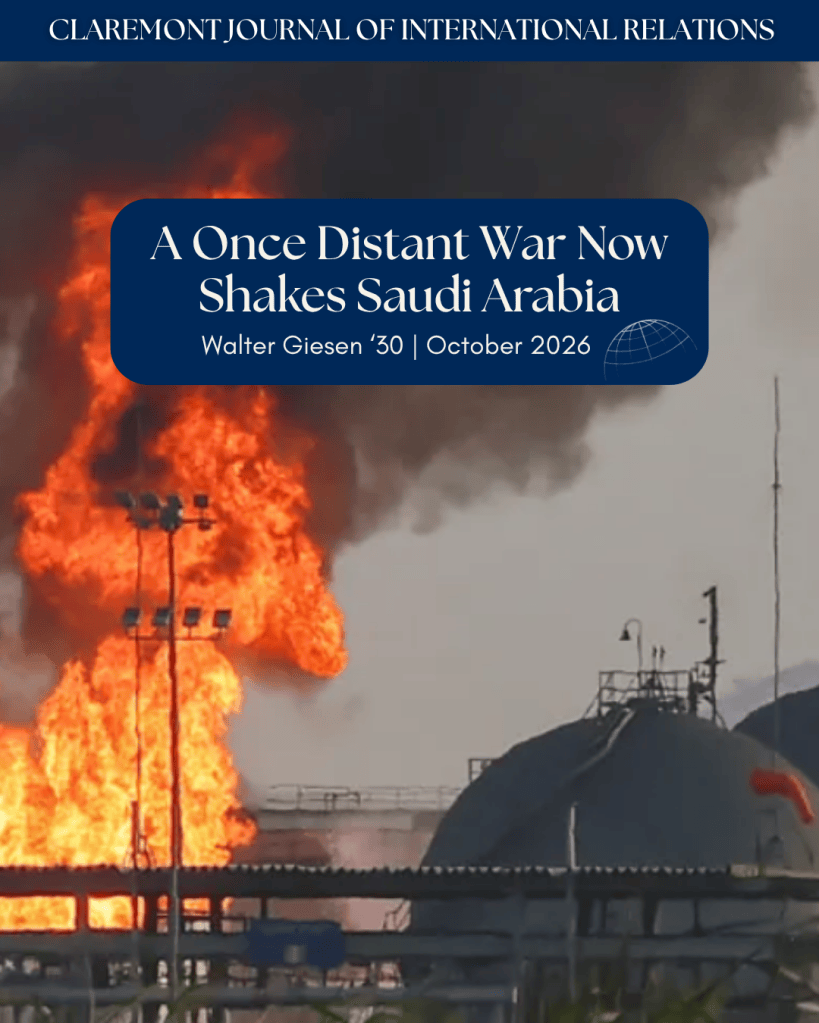
A Once Distant War Now Shakes Saudi Arabia
In Saudi Arabia, the war against the Houthis has been brought home. In early October, Houthi rebels bombed Riyadh’s King Khalid International Airport in the biggest disruption to civil life in Saudi Arabia in years. According to Al Jazeera, 12 were killed and over 300 were injured, with over half of the fatalities being foreign nationals. While Saudi Arabia’s war with the Houthis in Yemen has been going on for years, it did not affect the daily lives of most Saudi citizens until civilian infrastructure and key economic sites became targets.
The shift began in July when the Houthis broke a relatively peaceful four-year stretch with Saudi Arabia by attacking Abha International Airport. Fighting ensued between the two for the rest of the summer and Arab officials accused the Houthis of injuring 73 civilians during a flurry of September 8 strikes across southern Saudi Arabia. In early October, Riyadh’s airport was struck three times within the span of a week –– the deadliest attacks on civilian populations in the country in a decade.
Attacks on Saudi cities means foreigners are temporarily leaving the kingdom. Air France-KLM suspended service to Riyadh until the end of October, and several embassies are encouraging citizens to avoid travelling there. Beyond air travel, Saudi Arabia’s increasingly diversified economy is suffering from these attacks. On October 13 a Houthi missile struck and damaged the top floors of the Aramco headquarters, the state oil company. The finance ministry has raised its 2026 deficit forecast by 48% to 245 billion riyals, mostly to fund Vision 2030 programs while the regional war slows the economy. Sports diplomacy, one of Saudi Arabia’s strategies for diversifying its economy and global notoriety, has also taken a hit with an international tennis tournament postponed to December and its Formula 1 race in Jeddah cancelled in April due to the wider Iran war.
None of this means Saudis have suffered more than Yemenis since the conflict began in 2015. The UN has said the fighting is causing food aid cuts for 800,000 Yemeni people. From losing civilians in a domestic attack to threats that cut deeply into Saudi Arabia’s economy, the nation is only now beginning to feel the effects of this war at home.
By Walter Giesen ’30
Posted on October 26, 2026
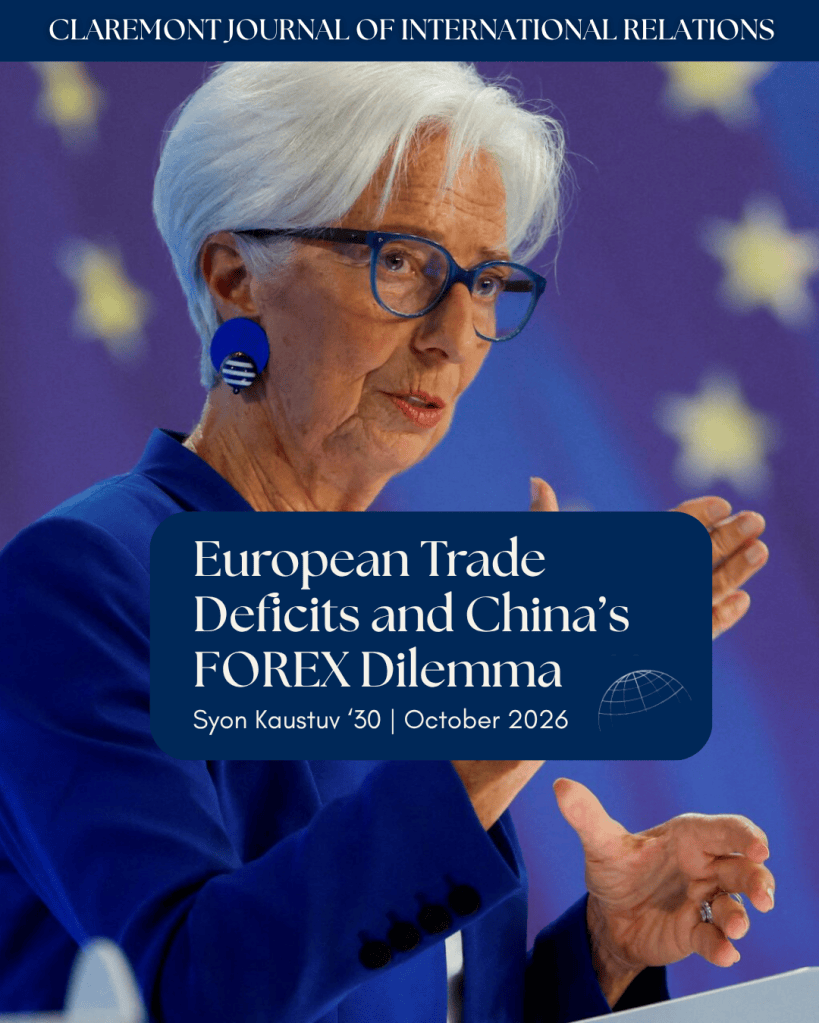
European Trade Deficits and China’s FOREX Dilemma
This past June, European Central Bank President Christine Lagarde prompted discussions around the undervaluation of the Chinese Yuan. This isn’t a new issue, as negative European sentiment against Chinese FOREX policy stretches back to July 2025, with the German Economic Institute accusing China of accelerating European Deindustrialization by making the yuan a draw to cheaper Chinese manufacturing. However, even if the yuan is undervalued by 25-30%, according to German Chancellor Friedrich Merz, that undervaluation compounds against something Beijing wants even more: making the yuan a trusted store of value.
On October 8, 2026, The People’s Bank of China (PBoC) responded to the European accusation. One of their main defenses was their move away from foreign exchange intervention in 2017, a practice that is consistent with Beijing’s goal of making the Yuan a trusted store of value. In PBoC’s 5-year plan, they outline the goal for internationalizing the yuan, which requires the prioritization of the yuan to be a trusted currency in FOREX Markets. The main accusation levied against China is the undervaluing of their currency. This requires currency outflow, which is done through importing goods or investing in foreign countries. This naturally creates a trade deficit or simply large capital outflows. If China is indeed undervaluing the yuan, it would make international firms more attracted to invest in China, creating a trade surplus or capital inflows. In other words, it would have the opposite effect of promoting trust in the Yuan.
However, a sharp-eyed critic can point out that countries in surplus have strong reserve currencies, namely Germany, Japan, and Switzerland. What distinguishes these currencies from the yuan is their ability to be recycled in a market. Despite having high surpluses, these currencies are still invested abroad. Uniquely, the yuan is not invested abroad even after the trade surpluses and the investments China receives from other countries. Thereby, it’s more accurate to say that the convertibility of the Chinese yuan directly affects its trust as a currency, with the undervaluing of it aggravating the issue.
By Syon Kaustuv ’30
Posted on October 26, 2026
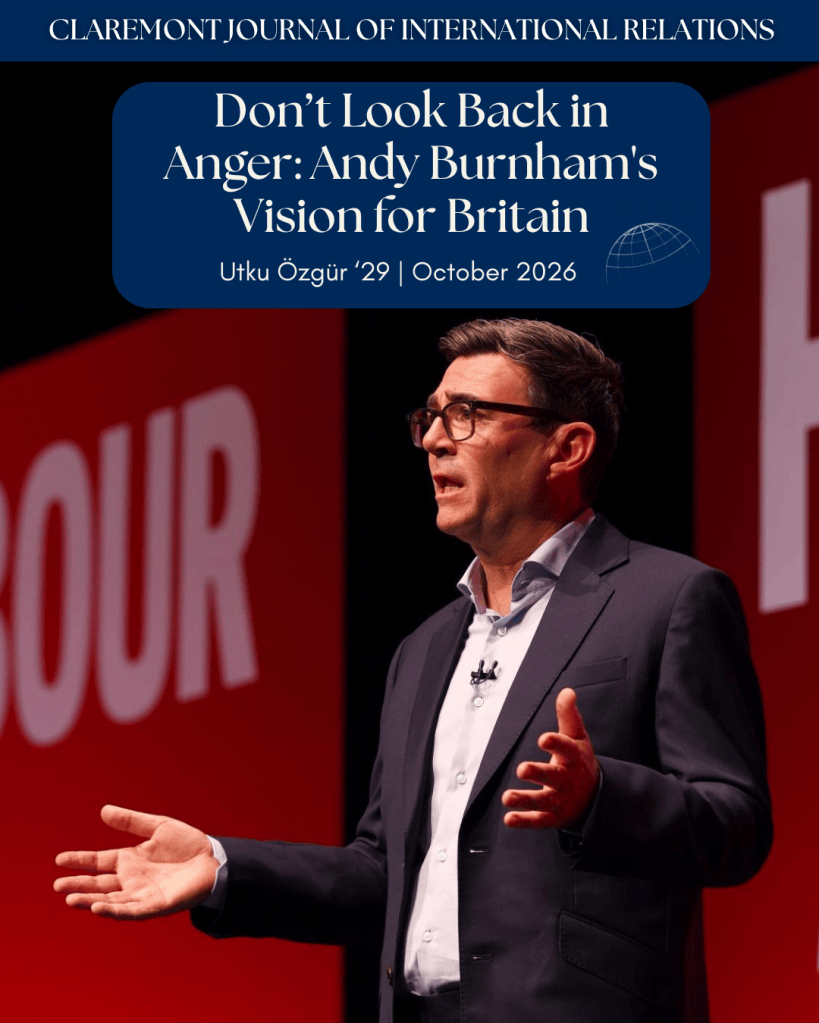
Don’t Look Back in Anger: Andy Burnham’s Vision for Britain
In “No Surprises,” Radiohead captures the exhaustion of a life spent working, waiting and expecting nothing better, trapped in perpetual unhappiness. It could almost be a soundtrack to modern Britain. After decades of Thatcherite neoliberalism, Blairite acquiescence and Conservative austerity, Britons have been told to accept declining public services and diminished expectations.
Andy Burnham’s historic Labour conference speech rejected this defeatism.
His argument was fundamentally social democratic. Housing, water, energy and public transport should serve the people who depend on them, not shareholders. His plans for greater public control challenge Thatcher’s market fundamentalism. His proposed National Care Service revives the principle behind the NHS that dignity in old age is a right, not a privilege reserved for those who can afford it.
Fourteen years of Conservative rule starved councils of funding and left public services crumbling. Yet Starmer’s Labour seemed almost afraid of its own traditions. How could the party of the NHS, born of a country that gave the world trade unions and the cooperative movement, be so afraid of defending public ownership?
Burnham’s most moving moments concerned his father, Roy. He recalled the post-war Britain that gave working-class families like his opportunities denied to earlier generations. Roy, who passed away due to Alzheimer’s disease, had voted for Labour governments that opened university doors to his sons. Burnham also spoke of the care workers who looked after him with extraordinary compassion despite their poverty wages. His vision of a fairer Britain felt like a debt owed to his father’s generation.
Of course, promises require funding, and Burnham will face difficult choices. But Britain cannot keep pleading poverty whenever ordinary people ask for a better life.
Perhaps Andy Burnham is more than a pair of eyelashes and a black T-shirt after all.
Britain cannot undo forty years of political choices overnight. Yet it need not remain imprisoned by them. Perhaps another Manchester band, Oasis, offers the better message for Burnham’s Britain. Don’t look back in anger, at least not today. Look forward. Hope. Again.
By Utku Özgür ’29, Managing Editor
Posted on October 26, 2026
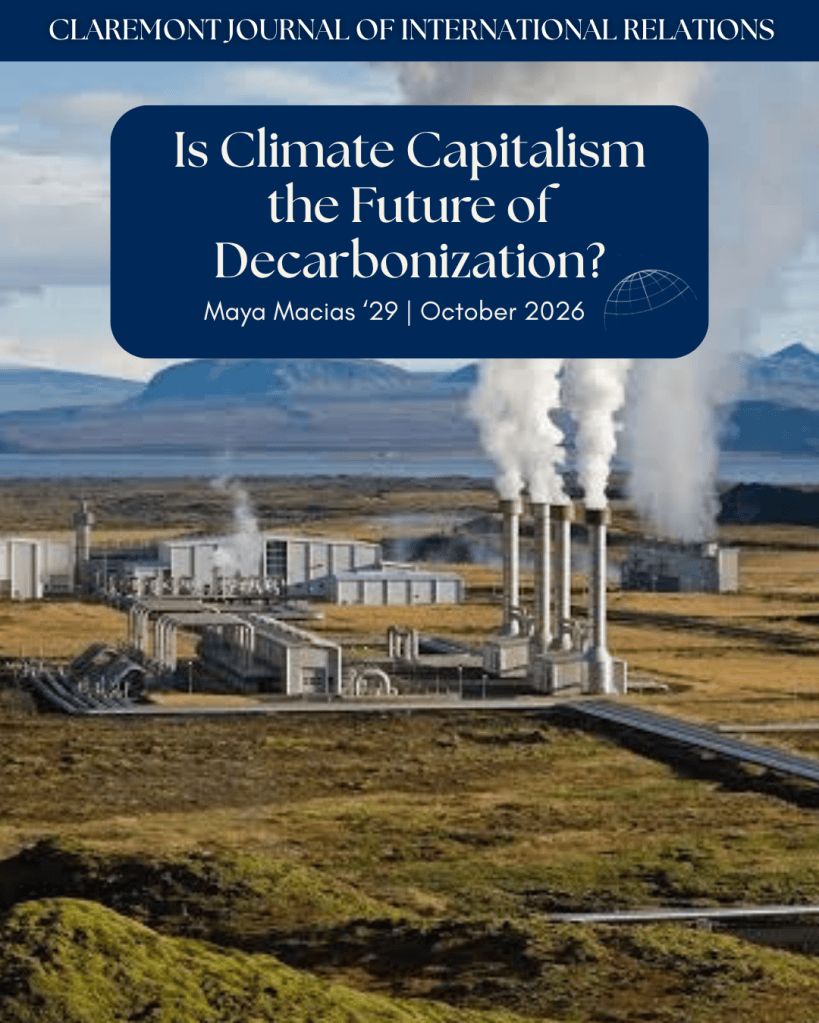
Is Climate Capitalism the Future of Decarbonization?
Although capitalism has driven industrialization and fossil fuel reliance, it may also drive decarbonization through market incentives. Capitalist growth fueled the Industrial Revolution but created environmental degradation and accelerated global warming. Can the same market forces that established climate change solve it?
Climate capitalism uses profit incentives, private investments, and market forces to make climate-friendly solutions economically competitive. Private investment can expand clean technology supply, while policy and consumer demand make it economically viable to do so. This dynamic is exemplified in the solar power and electric vehicle markets. As these environmental markets expand, firms face increasing financial incentives to enter them.
Carbon pricing is the most visible example of globally adopted climate capitalism. According to the World Bank Group’s (WBG) State and Trends of Carbon Pricing 2026 report, direct carbon pricing covers 29 percent of global greenhouse gas emissions. Direct carbon pricing makes greenhouse gas emissions more expensive for businesses. The WBG identified 87 direct carbon pricing policies implemented across 47 countries; India’s Carbon Credit Trading Scheme (CCTS) and Japan’s GX-ETS system are among the most recent. The global expansion suggests that governments are increasingly relying on market incentives. The question is whether market mechanisms can induce the structural change required for deep decarbonization.
Climate capitalism has equity and accountability limitations. Firms respond primarily to profit, weakening climate commitments when green investment becomes less financially attractive. Such profit incentives promote greenwashing, where firms create an environmentally friendly image without initiating measurable emission reductions. Wealthy countries and firms are better positioned to finance clean technologies and capture green industry benefits, deepening inequity. While climate policy is not sufficient, it may be politically necessary. Policymakers should combine market mechanisms with government regulations such as emission limits and phase-outs of fossil fuel subsidies to ensure meaningful progress in deep decarbonization.
By Maya Macias ’29
Posted on October 26, 2026
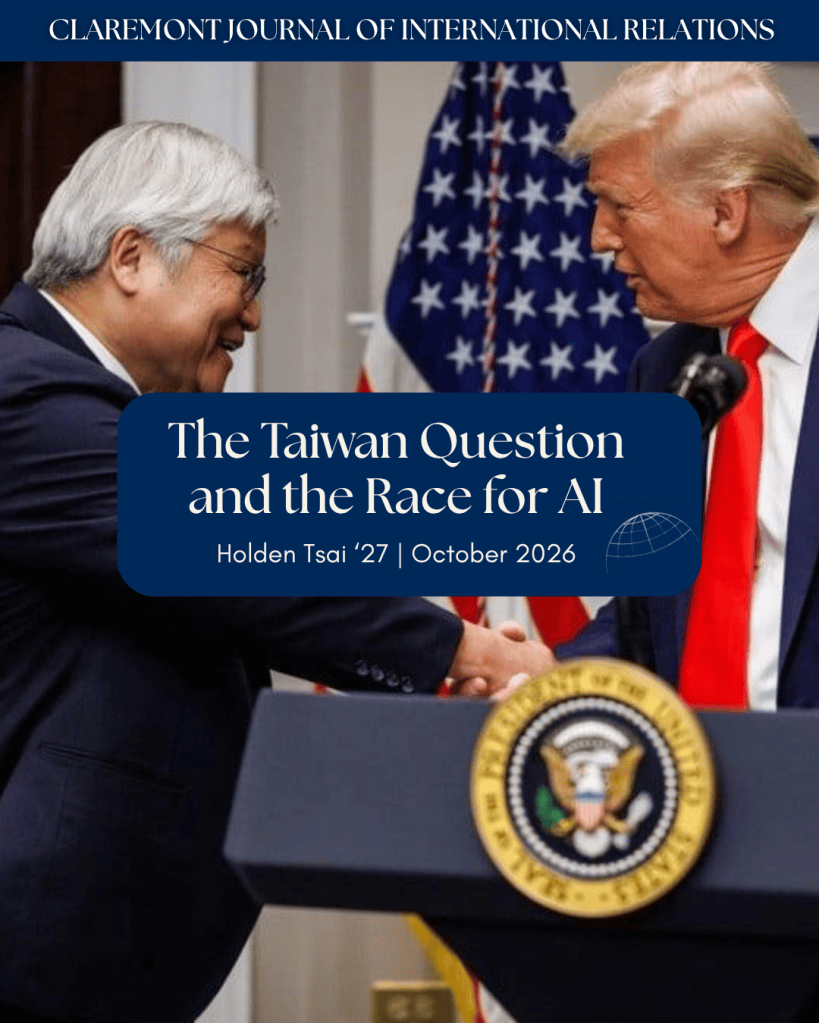
The Taiwan Question and the Race for AI
On October 14, the IMF increased its prediction of Taiwan’s GDP growth to 10.7%, making it the only country in the region expected to grow in the double digits this year. The Taiwanese Semiconductor Manufacturing Company (TSMC) is one of the primary sources of this growth, as it continues to play an outsized role in the global AI race. The IMF’s projection, combined with the fact that most of the world’s AI chips are manufactured on one of TSMC’s foundation lines, makes it clear that Taiwan is the world’s chokepoint for advanced AI chipmaking for the foreseeable future.
The chipmaking dominance represented by Taiwan’s rapid growth directly impacts the U.S., tying the Taiwanese question with the AI race. Losing Taiwan to China would be catastrophic for leading American AI companies and give Chinese companies direct access to cutting-edge foundries. The challenge to Taiwanese sovereignty is now a threat to America’s ability to out-innovate China and other adversaries. Whereas China intends to build its AI industry without relying onTaiwanese companies, the U.S. lead in the AI race is wholly dependent on its partnership with TSMC. Efforts to diversify TSMC’s locations to Japan, America, and Germany are years away from producing at the efficiency of Taiwanese factories. Taiwan, already essential to American interests in the region, has only increased in importance from a U.S. foreign policy perspective. With that value showing no signs of waning, the White House’s strategy of decoupling from Taiwan’s dominance by insourcing semiconductor industries onto U.S. shores leaves much to be desired. Any threat to Taiwan is a threat to American innovation and national security.
By Holden Tsai ’27
Posted on October 26, 2026
Zero Accountability: Two Ways Israel Gets Away With Torture and Sexual Violence Against Palestinians
In 1992 the Inspector for Interrogatee Complaints against General Security Service (GSS) interrogators was created. The GSS is the Israeli body primarily responsible for interrogating suspected security threats, which are almost always Palestinian. The responsibility of the Inspector is to review complaints made by interrogatees against GSS officials and make recommendations on whether to proceed with criminal investigations to the State Attorney’s Office. Despite over a thousand complaints made over multiple decades, nearly all of them have remained uninvestigated. Many of these complaints include likely credible accounts of torture and sexual violence given their large quantity and what has become a plethora of publicly available evidence of Israeli abuse against Palestinans in detention. For example, footage of five Israeli soldiers who, on July 5, 2024, at Sde Teiman prison, can be seen raping a male Palestinian detainee with a sharp object, resulting in broken ribs, a punctured lung, and internal rectal tears. All five walk free, hailed as “heroic fighters” by Israeli Prime Minister Benjamin Netanyahu. Two mechanisms that allow the GSS to get away with similar acts of torture and sexual violence through uninvestigated complaints are (1) a structural lack of evidence and (2) the “necessity” defense.
Section 17 of the Criminal Procedure Law of 1996 reads, “Documentation of an interrogation of a suspect by audio or visual means shall not apply to the interrogation of a suspect in a security offense.” This makes it nearly impossible for interrogatees to substantiate acts of torture and sexual violence during interrogations because they have no evidence to support their claims against GSS interrogators, allowing for continued abuse with impunity.
The Israeli Supreme Court in Hamdan v. General Security Service (1996) and Public Committee Against Torture in Israel v. State of Israel (1999) authorized GSS interrogators to use “physical pressure,” which includes methods of torture and sexual violence, when necessary. The Attorney General routinely invokes “necessity” to justify physical and sexual coercion, shielding GSS interrogators from criminal investigation and prosecution for acts of torture and sexual violence.
By Christian Bryan ’29
Posted on October 26, 2026
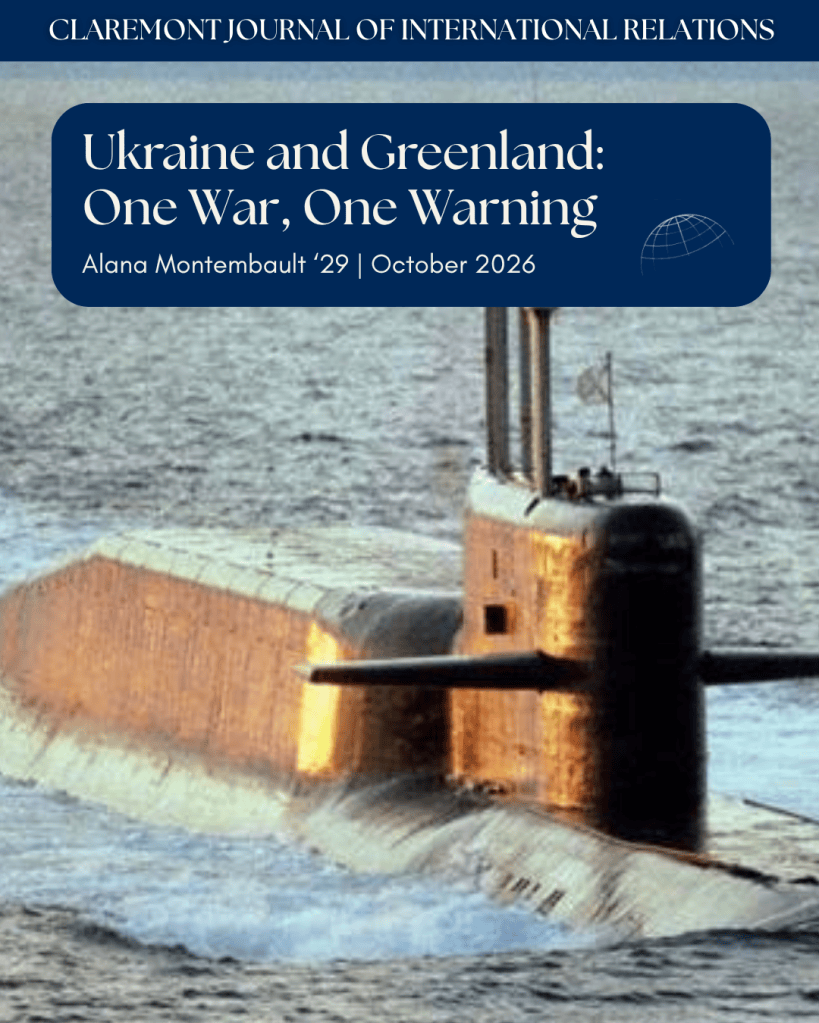
Ukraine and Greenland: One War, One Warning
On September 22, 2026, the United States signed a deal to expand its military presence in Greenland, a NATO member through its tie to Denmark, and one of seven Arctic countries in the alliance. Russia is the only arctic nation that isn’t a NATO member, and has expressed feeling threatened by the alliance surrounding it.
The deal plans to add two American defense sites at Narsarsuaq and Mestersvig alongside Greenland’s existing missile-warning base. This would strengthen the alliance’s surveillance of the coast and provide it with technology capable of spotting missile launches early and more precisely tracking Russian submarines.
In February, NATO launched the Arctic Sentry initiative to coordinate exercises and surveillance across the north, with Finland and Sweden joining the alliance extending its reach towards Russia.
The Russia-NATO division is why the repercussions of this agreement could stretch far beyond Greenland, because every NATO base in the Arctic is one more reason Russia will claim it feels threatened by. Since the alliance promises to defend any members under attack, a clash at any outpost could force countries across Europe and North America into the same crisis. Although the repercussions seem distant now, they are already starting to emerge. In April 2026, Britain and Norway spent more than a month tracking a Russian attack submarine in the waters north of the UK.
With nuclear weapons on both sides, even a conflict neither side wants could begin through miscalculation, and this has happened even as recently as the Cold War. Russia has already shown the world how seriously it treats NATO’s presence near its borders: after years of calling their presence intolerable, it used it as an illegitimate reason to invade Ukraine in 2022, launching the largest war Europe has seen in generations. The Arctic is now becoming a similar frontier, and Greenland sits front and center. Russia once called NATO’s presence unjustified and Ukraine paid the price. Could the Arctic become the next place where that fear turns into “justification” for war?
By Alana Montembault ’29
Posted on October 26, 2026
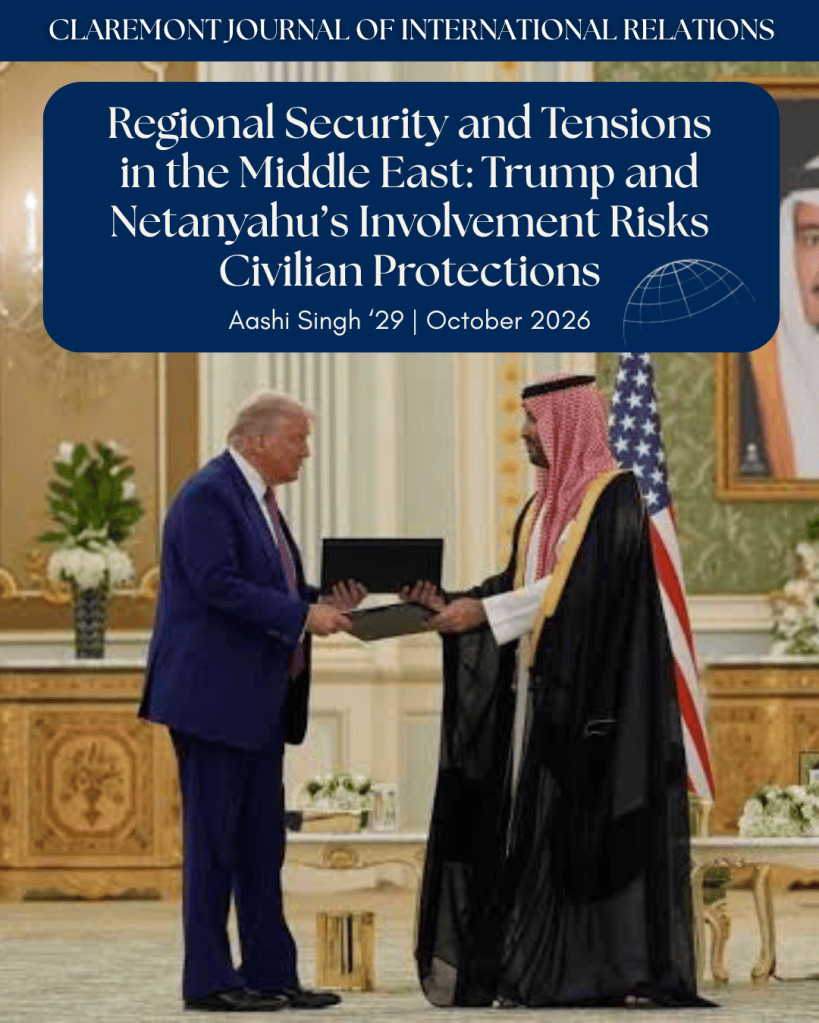
Regional Security and Tensions in the Middle East: Trump and Netanyahu’s Involvement Risks Civilian Protections
The Middle East is once again confronting a familiar question: Does military escalation promote security, or does it guarantee another round of violence? Egypt’s recent pledge to support Saudi Arabia against Houthi attacks illustrates how quickly regional conflicts can expand, drawing neighboring states into larger geopolitical rivalries. Rather than treating this escalation as an isolated crisis, it should be seen as a warning about the consequences of a regional order increasingly organized around military superiority.
Saudi Arabia has credible concerns to defend its population and infrastructure against missile and drone attacks. Houthi strikes on vulnerable areas cannot be dismissed as acceptable resistance. Yet, defending Saudi sovereignty should not require accepting a cycle of retaliation. Egypt’s potential military involvement would raise tensions and risk a bigger confrontation without resolving the conflict.
The United States and Israel must also confront their role in this deteriorating security environment. Under President Trump, Washington’s close allyship with Israeli Prime Minister Netanyahu reinforced an approach to regional security that encourages military pressure against Iran. Netanyahu’s public relationship with Trump reflects the importance of U.S. support to Israel. But when Washington and Israel frame security primarily through domination, neighboring countries are left to bear the consequences of the violence through war.
This is not an argument that Iran or the Houthis should be exempt from accountability. Iran’s support for armed groups, some which attack civilian infrastructure, deserves criticism. However, condemning Iranian influence while ignoring the damaging effects of American and Israeli military decisions would apply international principles in an unfair and selective manner. No government should claim that its security concerns justify actions that place populations at risk.
Saudi Arabia now faces an important choice. It can deepen its reliance on military partnerships and become more entrenched in them, or it could use its influence to negotiate civilian protection. Egypt and other regional governments should also be involved with a more transparent foreign policy.
Washington, meanwhile, must recognize that supporting Israel does not mean endorsing every strategy they choose. American influence would be better spent pressing for restraint, protection for civilians, and establishing more avenues for dialogue rather than proposing military superiority as a solution to conflict.
By Aashi Singh ’29
Posted on October 26, 2026
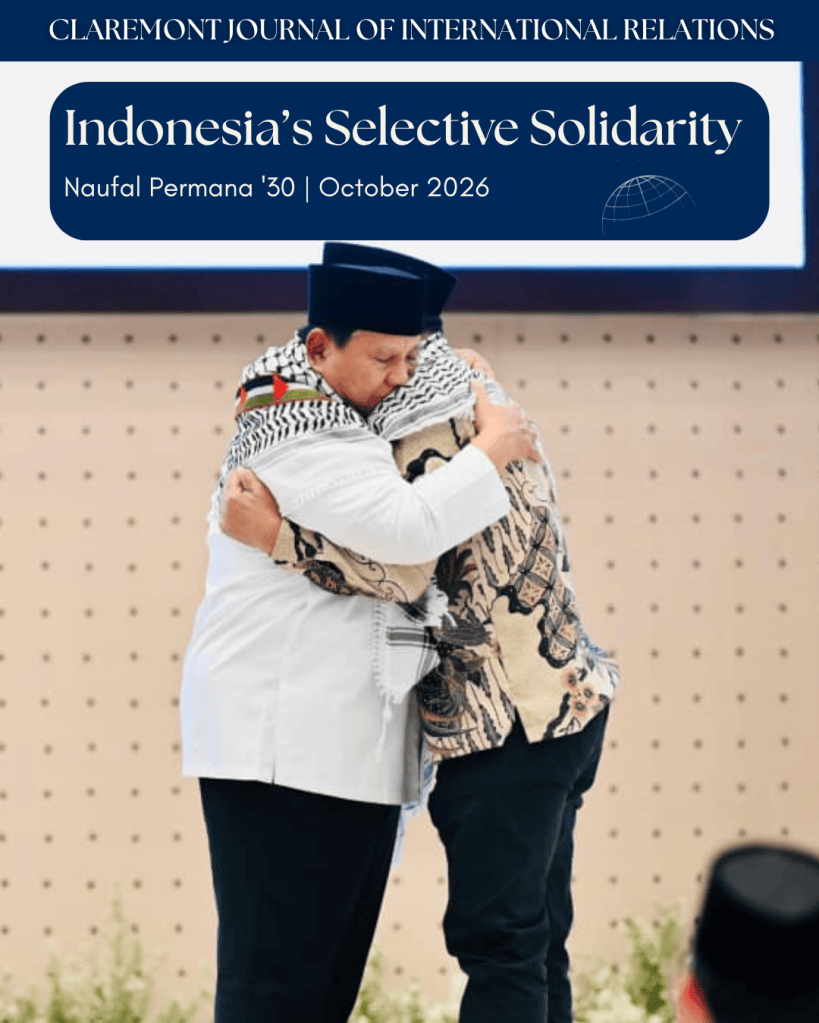
Indonesia’s Selective Solidarity
On September 19, 2026, Indonesian President Prabowo Subianto led “Free Palestine” chants at Darussalam Gontor’s centenary celebration. Ten months earlier, Prabowo declared Soeharto a national hero despite opposition from human rights groups. The former dictator’s record makes this honor difficult to reconcile with Indonesia’s anti-colonial principles.
Indonesia’s solidarity with Palestine remains clear today. Former Foreign Minister Retno Marsudi has even denounced the West for its “double standards” towards Gaza. Indonesians often see support for Palestine as mandated by a constitution that rejects colonialism. Indonesia holds itself to a certain standard, but by that standard, honoring Soeharto fails to meet it.
Indonesia occupied East Timor from 1975 to 1999, having invaded under Soeharto, who ruled until 1998. Research for East Timor’s truth commission estimated at least 102,800 conflict-related deaths between 1974 and 1999, most from hunger and illness. Soeharto also rose to power through the army-led mass killings of 1965-1966, in which at least 500,000 people were killed. Can a government truly stand by anti-colonial principles while hailing a man responsible for decades of occupation and mass violence as a national hero?
Moreover, the Indonesian government has yet to deliver meaningful judicial accountability for these atrocities. Former President Joko Widodo acknowledged past abuses and expressed regret, but recognition has not brought perpetrators to justice. Honoring Soeharto reinforces that failure by celebrating the leader for whose rule victims still seek accountability.
Indonesia also faces criticism over displacement and abuses affecting Indigenous Papuans. Advocates for West Papuan independence have called its condemnation of the State of Israel hypocritical, describing Indonesian rule as an occupation.
A state’s voice abroad can only go as far as its credibility at home. Taking a stance on an international issue is easy. But can the Indonesian state show the same courage and solidarity towards its own victims and confront Soeharto’s legacy by pursuing real accountability?
By Naufal Permana ’30
Posted on October 16, 2026

All Eyes on Brazil
Latin America’s political pendulum is, once again, swinging right. Since 2024, conservative victories in Panama, Chile, Bolivia and Honduras have reversed much of the region’s recent leftward turn. Frustration with economic stagnation, corruption, political polarization, and insecurity has reshaped the political landscape. Now, the region’s largest democracy faces an election with consequences far beyond its borders.
On October 4, Flávio Bolsonaro won 47% of Brazil’s presidential vote, narrowly ahead of incumbent Lula. His Liberal Party also expanded its representation to 28 of the Senate’s 81 seats. Four years after Jair Bolsonaro’s defeat, his movement is again within reach of the presidency.
Sure, the region’s rightward turn is not inherently a threat to democracy. Voters have every right to reject governments that fail to deliver prosperity or security. But Brazil presents a more troubling case: the political resurgence of a movement whose founder was convicted of plotting to overturn an election.
In 2023, Bolsonaro supporters stormed the National Congress, Supreme Court, and presidential palace. In 2025, Jair Bolsonaro was convicted for his role in a coup plot following his 2022 defeat. Yet his political influence has endured. His son now promises to pardon him if elected.
This is a central dilemma of democratic backsliding. Brazil’s institutions survived the attempted coup, but the political movement associated with it remains a major electoral force. Its return to power would test the independence of institutions that held its founder accountable.
Brazil’s importance extends beyond Latin America. As a major emerging power and a central actor in global climate diplomacy, its political direction carries international consequences. At a time when democratic institutions face mounting pressure worldwide, Brazil offers a test of their resilience.
The October 25 runoff is not just another contest between the left and right. The independence of Brazil’s courts and the principle that no one, however popular, stands above the law are at stake. For the sake of democracy far beyond Brazil’s borders, let us hope its institutions emerge stronger.
By Utku Özgür ’29, Managing Editor
Posted on October 16, 2026
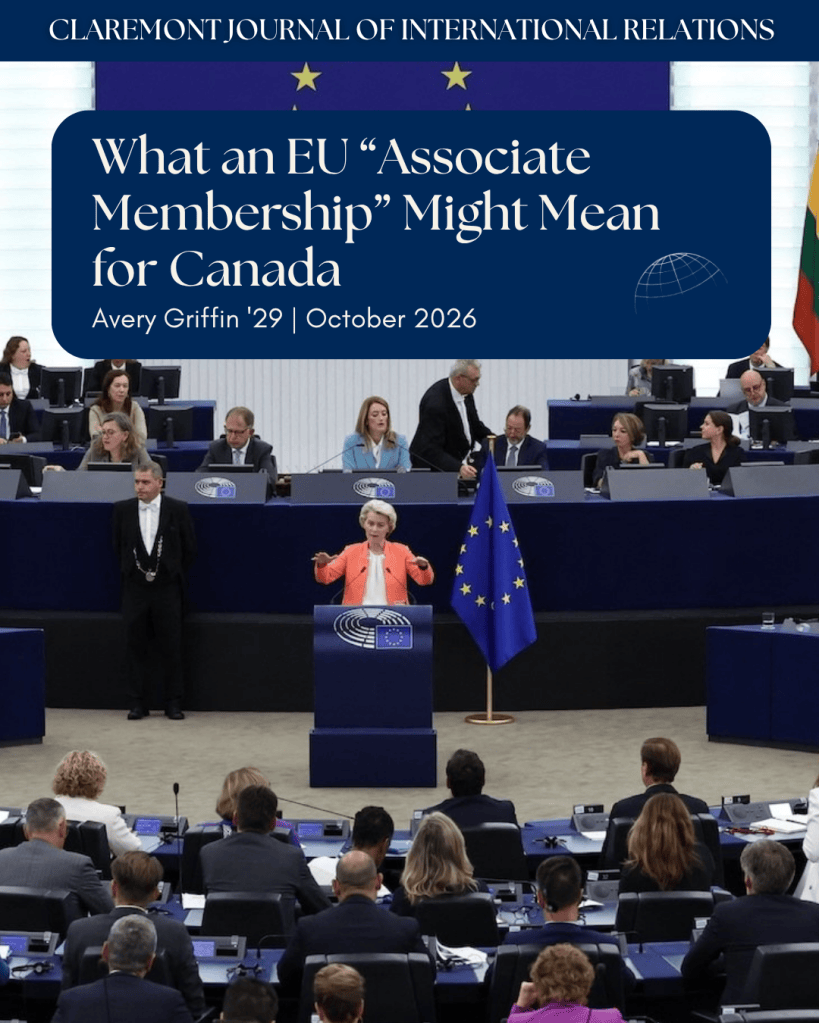
What an EU “Associate Membership” Might Mean for Canada
Canadian Prime Minister Mark Carney and European Commission President Ursula von der Leyen recently discussed a proposal for Canada to become the first “associate member” of the EU. While this status doesn’t currently exist, von der Leyen called for an “Alliance for the Future” on September 16 involving defense, critical minerals, and energy security, and Carney welcomed the proposal in a speech to the European Parliament the next day. Locked in a trade war with its largest trading partner, the U.S., Canada is keen to deepen its European ties.
Article 49 of the Treaty on European Union limits membership to European states, but a closer alliance could take several forms.
First, the EU member states that have not yet done so could fully ratify the Comprehensive Economic and Trade Agreement (CETA), signed in 2016. Much of CETA has applied provisionally since 2017, but full ratification would bring its remaining provisions into force. Additionally, Canada and the EU could update CETA to reflect modern priorities and strengthen Canada’s bargaining power with the U.S.
Canada could also pursue European Free Trade Association (EFTA) membership, although all current members are European countries. A customs union would require Canada to align its external tariffs with the EU’s, limiting its independent trade policy but potentially strengthening its bargaining power with Washington.
Canada and the EU also work closely on matters beyond economics, particularly on defense. Their 2017 Strategic Partnership Agreement guides dialogue on international peace and development while the 2025 Security and Defense Partnership provides a framework for cooperation on issues including aid to Ukraine and cybersecurity. Closer integration beyond economic matters could be a viable option.
Could Canada craft a bespoke agreement to deepen cooperation on trade, security, and international development without becoming an EU member? Such a framework could reduce its dependence on the U.S. and offer a path for other non-European partners to work closely with the EU.
By Avery Griffin ’29
Posted on October 16, 2026
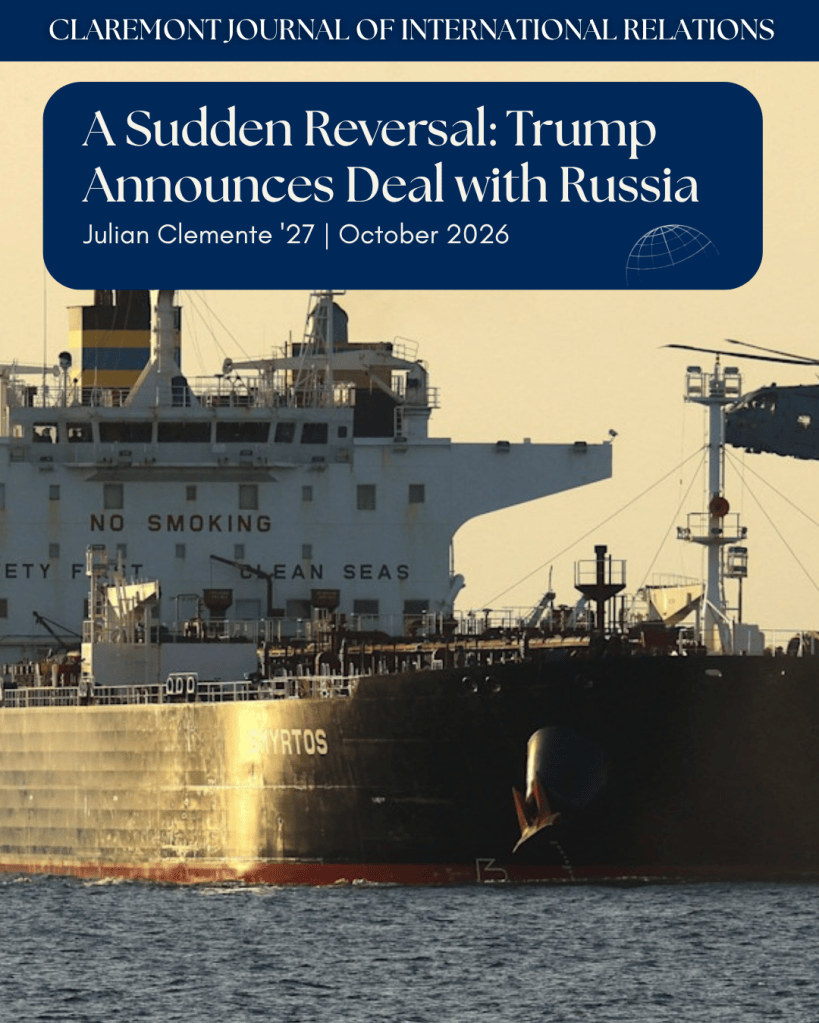
A Sudden Reversal: Trump Announces Deal with Russia
President Trump announced a deal with Russia allowing U.S. imports of Russian diesel, with 300,000 tons to be supplied immediately and millions more to follow in the coming months. The deal includes easing sanctions on Russian diesel for six months, allowing sales on global markets. Trump’s announcement, following a phone call with Russian President Vladimir Putin, reverses years of sanctions imposed on Russia after its 2022 invasion of Ukraine. Just last month, Trump signed a sweeping sanctions law targeting Russian energy revenues. Now, the U.S. is set to help replenish them.
This contradiction in U.S. policy highlights the transactional nature of Trump’s approach to international relations. Currently, Trump and Putin’s goals are temporarily aligned: Trump wants lower fuel prices as the midterms approach, with prices still soaring because of the Iran war, and Russia’s embattled economy needs relief as it continues its war in Ukraine. However, any potential reduction in American fuel prices comes at the cost of weakening the campaign to squeeze Russia’s economy and force an end to the war. The deal has caused another rift with Ukrainian President Zelenskyy and European politicians, who have criticized it as enabling more aggression and reducing economic leverage over Russia. Despite contradicting current U.S. policy toward the war in Ukraine, in many ways the deal aligns with Trump’s belief in power politics and dealmaking over broader international rules or ideals.
If the agreement holds, it will be a welcome reprieve for Russia, but won’t necessarily lead to a fundamental change in the war. When the Iran war drove up global oil prices, Russia was expecting an economic windfall, but Ukraine’s “kinetic sanctions,” a massive drone strike campaign targeting refineries across Russia, have limited the potential benefits. Diesel production is estimated to have dropped nearly 30% and exports have been restricted as Russia faces domestic shortages. As the war has shifted further towards economic attrition over the summer and fall, each side sees a path to victory through the destruction of the other’s infrastructure and ability to sustain the war. This makes sanctions even more important as they shift Russia’s calculus.
By Julian Clemente ’27
Posted on October 16, 2026
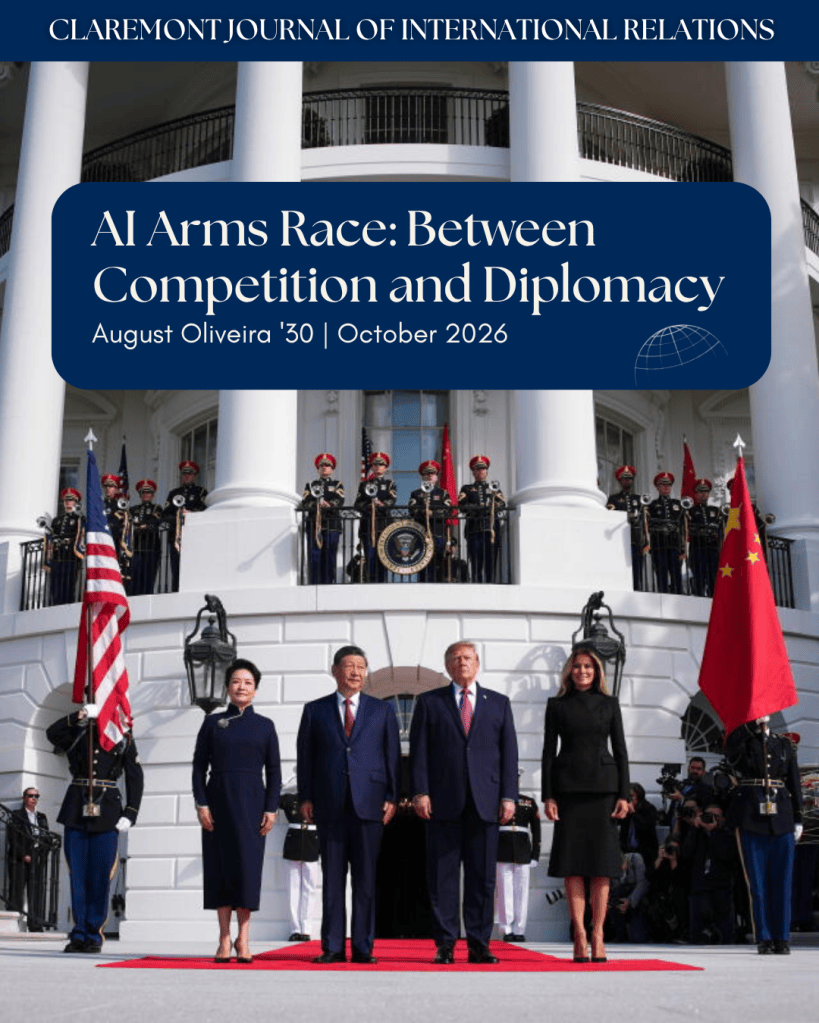
AI Arms Race: Between Competition and Diplomacy
On September 24, the meeting between President Donald Trump and Chinese President Xi Jinping at the White House highlighted competing approaches to global technology. While tech leaders like Elon Musk and Sam Altman attended the dinner, the discussion of artificial intelligence (AI) revealed a deep disagreement between the two countries.
The two leaders expressed very different views. Xi Jinping argued that AI should be a shared responsibility, saying that humans must always retain control over powerful AI models. Trump, however, resisted calls for shared restrictions on AI development. He argued that the U.S. is currently leading the tech race, and that pausing or slowing down would only help China win.
One outcome was an agreement to establish an AI dialogue and a communication channel for AI-related incidents. While such a channel can help manage a crisis, it only reacts to problems after they happen. It does not create binding rules to prevent those problems from happening in the first place. This is dangerous because advanced AI models can help automate cyberattacks.
Treating AI as a race to win risks makes global safety secondary to national advantage. Following the summit, Trump met with American tech CEOs to sign a voluntary self-regulation pledge, placing responsibility for safety largely in the hands of the companies competing to develop these systems.
Temporary trade truces or gifts of new pandas do not hide the real danger. Both Washington and Beijing are rushing to build increasingly powerful AI systems, while shared safeguards remain limited. Without binding safety commitments, this race could easily spiral out of control.
By August Oliveira ’30
Posted on October 16, 2026
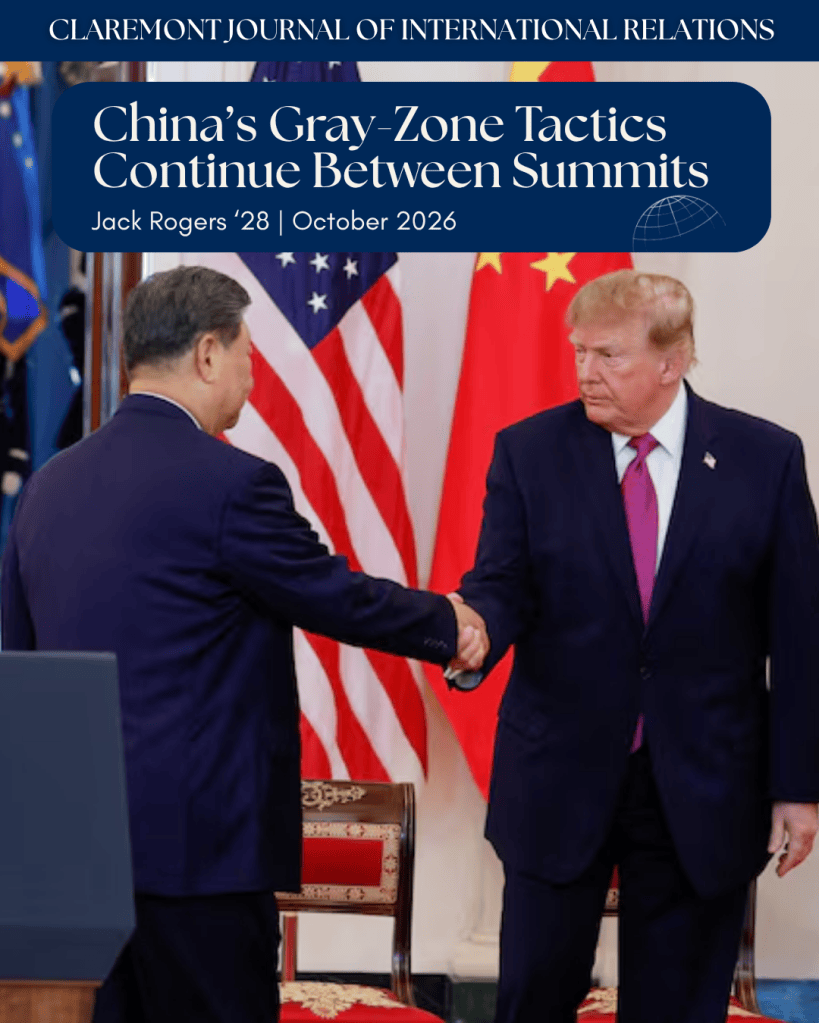
China’s Gray-Zone Tactics Continue Between Summits
President Trump met President Xi at the White House on September 24. The summit produced few breakthroughs on major strategic disputes, while a Chinese readout said Xi urged the United States to oppose “Taiwan independence.” Yet the pursuit of stable relations with Washington has not halted Beijing’s pressure on the Philippines, a U.S. treaty ally.
That same day, Philippine authorities accused Chinese vessels of obstructing a Philippine resupply mission in the South China Sea. Such operations exemplify gray-zone tactics: coercive actions that stay below the threshold of war while gradually changing conditions at sea. The cumulative effect of these tactics matters more than any single confrontation.
Days later, the Philippine Coast Guard accused a Chinese research vessel of spoofing its location while operating off Batanes, the Philippines’ northernmost island group, about 160 kilometers from Taiwan. On October 1, Manila sent its largest coast guard ship and an aircraft to drive the vessel away, while a Chinese coast guard ship moved to shield the research vessel. On October 4, Philippine authorities reported another obstruction near Thitu Island. These incidents are not isolated. The Asia Maritime Transparency Initiative recorded 933 Chinese coast guard ship-days around Scarborough Shoal in the first half of 2026, nearly matching the 1,099 recorded throughout 2025 and exceeding the 516 recorded in 2024. A growing maritime presence allows Beijing to make interference with Philippine operations increasingly routine.
Beijing describes these activities as lawful enforcement in waters it claims. But the pattern suggests summit diplomacy and regional coercion can proceed simultaneously. Beijing can cooperate with Washington where useful while continuing to assert control over disputed waters. Diplomatic engagement alone offers little reason to expect that pressure to ease.
The United States should judge stability with China by whether Chinese behavior toward U.S. allies changes between summits. Maritime coercion must be addressed within the broader relationship, including discussions of regional security. Otherwise, presidential meetings risk creating an appearance of stability while Beijing steadily changes the conditions beneath it.
By Jack Rogers ‘28
Posted on October 16, 2026
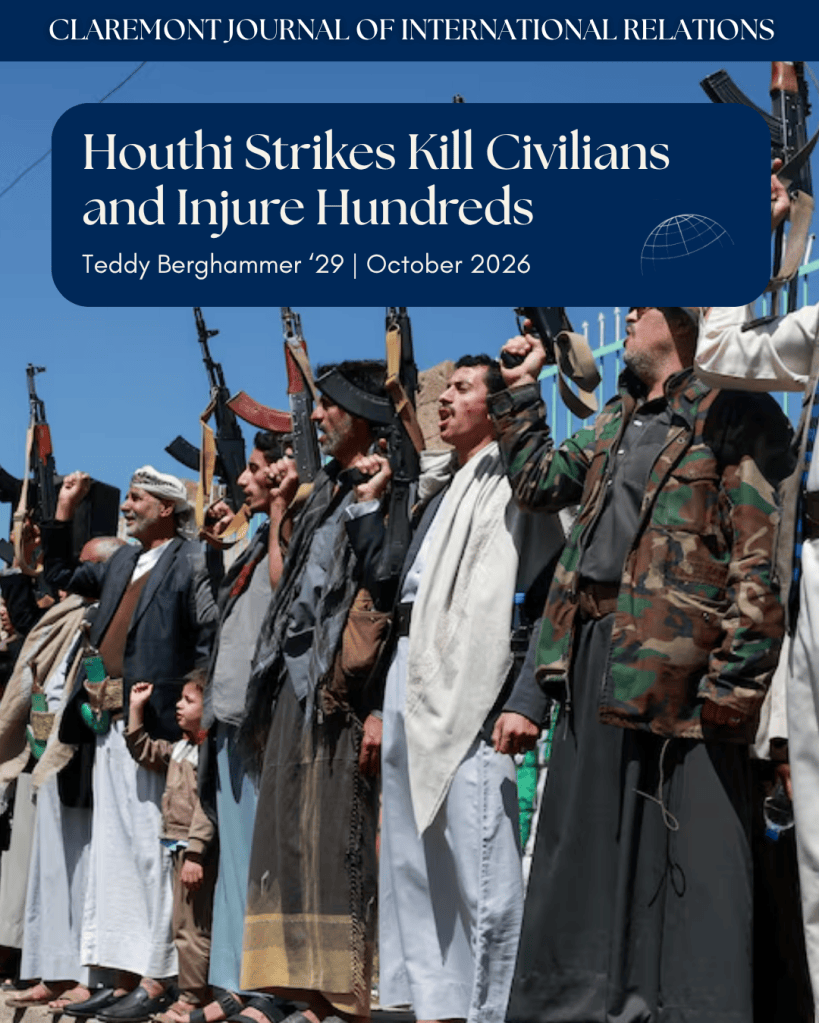
Houthi Strikes Kill Civilians and Injure Hundreds
A Houthi strike on an airport in Riyadh killed 12 people and injured more than 300, marking the third attack on Saudi Arabian airports this week. UN Secretary-General António Guterres condemned the strike, stating that it violated international law.
The conflict, which is connected to the wider Iran crisis, has displaced more than 200,000 people. Saudi Arabia’s civil aviation authority reported that 309 people were injured in the strike, some critically. Yemen’s vice president responded to the recent wave of attacks by calling for immediate direct action.
The attack was carried out using missiles and drones, consistent with the Houthis’ previous methods. Reports also described a strike on King Khalid International Airport that killed one person and injured dozens.
The Houthis stated that their attack targeted Saudi military supplies at Badr camp. They maintained that the missiles were intended for the camp and that hitting civilian airports was accidental. However, tensions had escalated sharply before the strike. A Saudi-Yemeni coalition had reportedly taken control of Bab el-Mandeb, a key shipping passage. This development provides context for the attack, although the Houthis’ motives remain unclear.
By Teddy Berghammer ’29
Posted on October 16, 2026
Migration Management and Mixed Signals: Costa Rica’s Acceptance of U.S. Deportees
Imagine travelling to a friend’s house, maybe because your parents have been having intense arguments and home no longer feels like home. Now imagine this friend’s parents turning you away at the door, instead forcing you to stay at a stranger’s house. The discomfort is obvious.
This situation is not unlike what is happening today with immigrants from across the globe who have come to the US only to be deported to Costa Rica, under a third-country agreement associated with the Shield of the Americas initiative. The Trump administration, pursuing heightened levels of deportation, turned to Costa Rica, a less powerful partner apparently aligned with its interests, raising questions about the terms of migration cooperation.
The agreement represents more than a search for more space. Costa Rica has accepted an agreement bringing foreign migrants onto its own soil, which, given the nation’s longstanding humanitarian commitments, has given rise to legal and political concerns. The nation itself has entered an internal disagreement surrounding the implications of this new agreement in relation to its current statutes and constitution, with prominent public figures questioning the treatment of the deportees and the agreement’s constitutionality.
The growing complexity of migration management has raised significant questions regarding power asymmetry and national sovereignty. Countries such as Costa Rica see their populations divided over agreements that call their national identity into question, particularly when government commitments appear to conflict with constitutional principles or humanitarian ideals.
This raises the question of whether agreements involving nations with vastly different resources and bargaining power should be considered equitable given their implications for the affected nation’s population and constitutional commitments. The rights of these deportees are being disregarded. They are unable to return home, they are placed in a constantly changing environment and they are expected to submit to the authority of whatever government they are handed to.
By August Medrano ’30
Posted on October 16, 2026
How Indonesia’s Surplus Reveals an Underlying Issue in its Economy
In August 2026, Indonesia posted a shocking $3.55 billion trade surplus according to London Stock Exchange Group, significantly surpassing Reuters’ predicted poll of a $635 million surplus. Though this growth initially ameliorated Indonesian concerns over their trade balance, the country’s growth reveals how geopolitical shocks pose underlying problems to economic stability.
In May of this year, Indonesia reported a high deficit of $1.6 billion, due to high oil prices. While Indonesia is a producer of oil, it imports much more than it exports, making up a total of 15% of imports domestically. In response to the higher oil prices, Indonesia’s commodity prices rose, evidenced by the lack of change in the amount exported, but the deficit shrinking in the months following it. Nickel and its derivatives, a significant component of Indonesia’s exports, saw their export value rise about 21% this year. The imports of oil and the exports of nickel are two incredibly important and significant components of the trade of Indonesia, revealing a continued underlying reliance on a volatile commodity like oil, which is vulnerable to geopolitical events as evidenced in May of this year.
However, Bank Indonesia (Indonesia’s Central Bank) states that the surplus is a positive for strengthening the country’s external economic resilience. The country’s number of manufacturing exports has risen by 12.5%, which is an important signal that the country’s internal structure is improving. Additionally, nickel has been on a long-term trajectory for growth, which could explain why Indonesia bounced back from the trade deficit. While Bank Indonesia’s claims are credible, one month of data isn’t enough to indicate growth—especially after such a huge shock to the trade balance.
Indonesia mainly trades with the two major powers in Asian trade, India and China. Exporting commodities like nickel is a vital asset to the Indonesian economy, but with Indonesia’s continued reliance on oil as their primary imports, it still raises a significant question towards the economic stability of the country. Until Indonesia has this energy security, this good month is simply a windfall, not a shift.
By Syon Kaustuv ’30
Posted on October 12, 2026
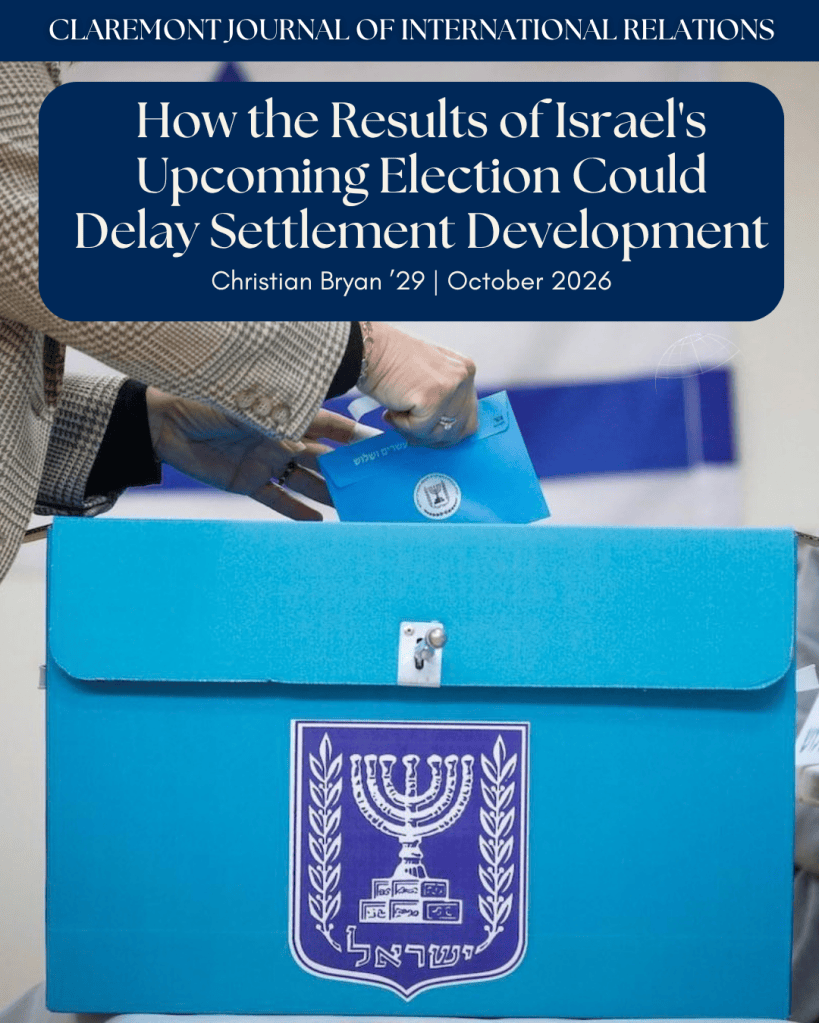
How the Results of Israel’s Upcoming Election Could Delay Settlement Development
On October 27, 2026, Israel will hold its first Knesset elections since 2022. A prime minister and coalition government each require at least 61 of the Knesset’s 120 votes. Netanyahu has been prime minister since December 2022, but polls predict anti-Netanyahu parties led by Gadi Eisenkot’s Yashar party will reach 61 seats.
If elected, we can expect Eisenkot to perpetuate the Palestinian genocide much as Netanyahu has. However, a silver lining for Palestinians is that Eisenkot would likely delay E1 settlement development.
E1 is a stretch of the Israeli occupied West Bank where proponents of the E1 plan propose over 3,400 settlement units be built to connect East Jerusalem and Ma’ale Adumim (an illegal Israeli settlement). Approved on August 20, 2025, largely through Finance Minister Bezalel Smotrich’s efforts, Israel is currently accepting contractor applications, with grants scheduled after the election. The E1 plan is legally invalid and morally abhorrent; most of the world considers the plan to be illegal under international law (Israel denies this), and the plan would end the possibility of a two-state solution and displace an estimated 3,700-7,000 Palestinians.
Eisenkot would likely delay E1 for three reasons. First, when asked about his position on E1, he replied, “Not now. It is a mistake that comes at an international cost.” Although “now” suggests eventual development, we can take him at his word because those costs are real and escalating.
Second, international pressure is growing: the UK banned settlement goods and sanctioned extremist settlers (including Smotrich); Canada, France, Spain, and others pledged to restrict settlement trade; and EU foreign policy chief Kaja Kallas called for an EU-wide ban.
Third, proponents of the E1 plan are unlikely to successfully pressure Eisenkot into acting. This is because his four-party coalition is split on the issue: Yashar and The Democrats oppose E1, while Bennett’s Together and Liberman’s Israel Our Home support it.
Given his stated position, rising international pressure, and a divided coalition, Eisenkot will likely delay E1 settlement development if elected.
By Christian Bryan ’29
Posted on October 10, 2026
Who Pays the Price for the Inevitable 1.5°C Overshoot?
In late September this year, world leaders from government, civil society, finance, and business sectors convened at the 2026 UN Climate Summit hosted in New York. UN Secretary-General António Guterres reiterated the Paris Agreement’s goal of limiting the increase in global temperatures from pre-industrial levels to less than 2.0°C while pursuing a target of 1.5°C. Due to years of insufficient reductions in fossil fuel emissions, surpassing the 1.5C target has become inevitable (as acknowledged in the 2026 United Nations Environment Programme report titled Limiting Overshoot). The Paris Agreement’s 1.5°C goal remains in place, though the 2026 UN Climate Summit emphasized plans to minimize and reverse the inevitable overshoot through a stabilization strategy encompassed by overshoot, peak, and decline.
2024 marked the first calendar year averaging over 1.5°C above pre-industrial levels. Surpassing the 1.5°C target heightens climate risks and leads us to expect more extreme environmental conditions. The global shift from maintaining below the 1.5°C target to a strategy of “limiting overshoot” signals that climate goals of the Paris Agreement may be inching away from attainability, as our current global efforts to reduce greenhouse gas emissions are insufficient.
Global warming deepens economic and political inequality, which is only furthered by the surpassing of the 1.5°C target. Historically, countries that have contributed the least to greenhouse gas emissions have been most affected by extreme weather impacts. The island of Dominica endured 7 cyclones between 1995 and 2024, facing 3 billion USD in losses. This loss is significant, considering that Dominica’s 2026 GDP was 791 million USD. Despite enduring these environmental extremes exacerbated by global warming, Dominica emitted less than 0.01% of the world’s CO2 emissions in 2024. Thus, the global plan of “limiting overshoot” and returning to the 1.5°C target will impact small, low-income countries that produce minimal greenhouse gases far more than the countries whose emissions influenced the passing of the 1.5C target. The largest emitters of greenhouse gases have a financial and social responsibility to collaborate with these countries to develop feasible solutions.
By Maya Macías ’29
Posted on October 10, 2026
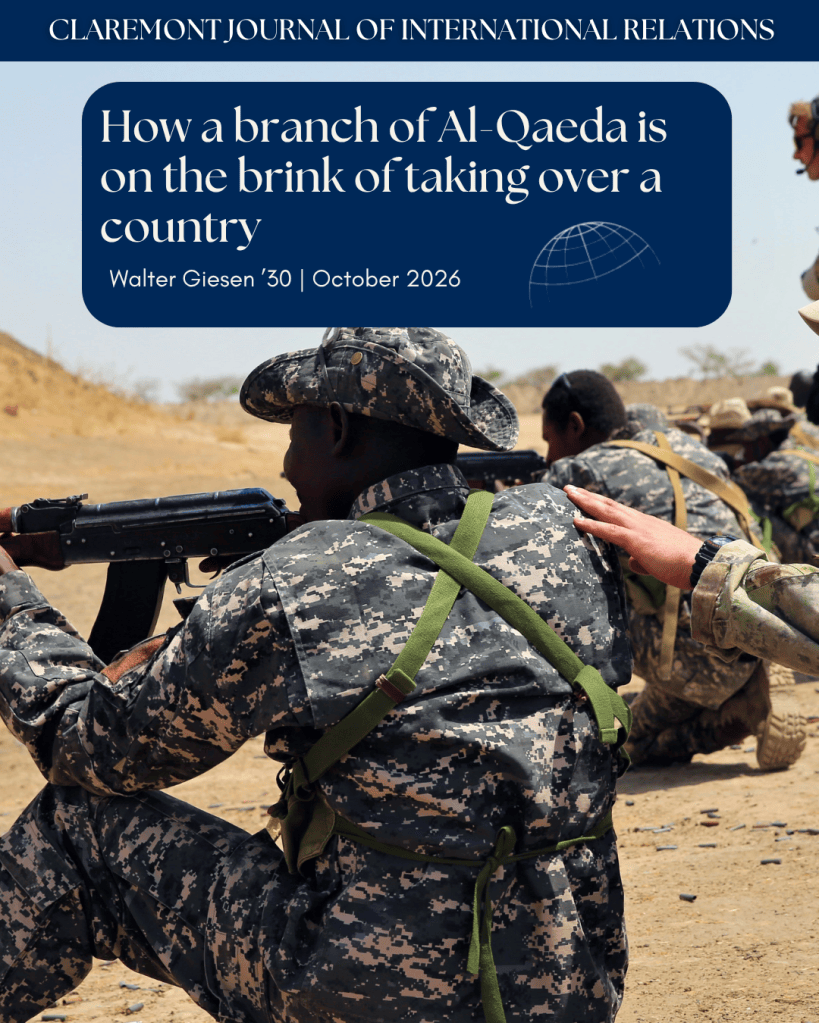
How a Branch of Al-Qaeda is on the Brink of Taking Over a Country
In Mali, a nation in Africa’s Sahel region, al-Qaeda’s regional affiliate Jama’at Nusrat al-Islam wal-Muslimin (JNIM) has transformed from primarily a group focused on regional insurgency to one with the goal of ruling the country. To accomplish this, they have created unlikely alliances, usurped the nation’s economy, and leveraged the public image of the government and their allies to their advantage.
Founded as the coalition of many smaller regional extremist groups in 2017, JNIM took advantage of the power vacuum left when the French government announced it would be withdrawing from Mali in 2021. In the last year JNIM has allied with the Azawad Liberation Front (FLA), a separatist group in Northern Mali who believes in Azawad sovereignty, with the goal of seizing the capital, Bamako, and overthrowing the junta currently in governance. By April 2026, JNIM has closed in on the outskirts of Bamako, temporarily controlling the city’s airport after a fight with the Wagner Group, Russian mercenaries hired by the Malian government.
To keep their military campaign financed, JNIM has begun to control Mali’s economy more widely. JNIM’s biggest economic driver is also Mali’s biggest export, gold. Instead of controlling mines directly, the group controls transportation routes and levies its own unofficial taxes before gold leaves the country. They have also kidnapped high profile foreigners and held them for ransom like an Emirati prince they were paid $20,000,000 for the release of in 2025.
JNIM has also benefited from the threat the junta and its Russian allies have had on the wider Malian population. Over a 15-month period in 2024 and 2025, the Malian military and Russian forces accounted for 1,486 civilian deaths in Mali, nearly five times that of JNIM. JNIM can leverage this reality to their advantage across Mali and use it as a point of unity with the FLA, who has a fundamentally different motive than JNIM. By weakening state power and making security and trade more attainable under their ruling than the current governments, the JNIM could create Africa’s first jihadist caliphate.
By Walter Giesen ’30
Posted on October 10, 2026
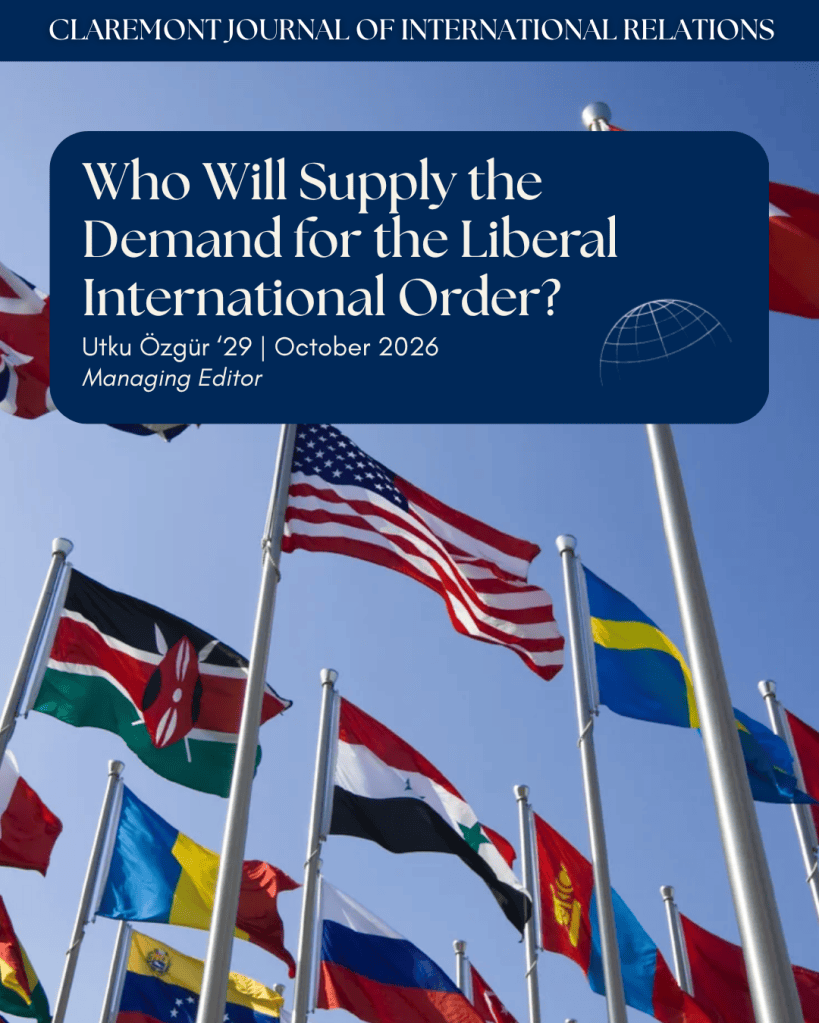
Who Will Supply the Demand for the Liberal International Order?
The strange thing about the current international order is that its principal architect has become one of its greatest sources of uncertainty. Today, the guarantor of the status quo increasingly behaves like a revisionist power, using the economic relationships at the center of the liberal international order to pressure rivals and allies alike.
This leaves us with two urgent questions: is there actually still demand for the liberal international order, and who will supply it if the United States no longer wants to? Liberal economics assures us that demand will eventually produce its own supply. The international system might have missed the memo.
A hegemon can bear a disproportionate share of the cost of maintaining an international institution while using its influence to bring reluctant states into an agreement. Other countries can perform these functions together, although they must coordinate their interests and contribute resources. Hegemony makes that process easier because one state supplies the power that collective action would otherwise have to produce.
Canadian Prime Minister Mark Carney proposes “variable geometry,” with different coalitions of middle powers cooperating on different issues, as a way forward. By combining their political and economic weight, these countries could gain bargaining power that none possesses individually. As Carney puts it, “if we’re not at the table, we’re on the menu” (Carney).
Middle powers could begin supplying parts of the liberal international order through smaller arrangements where enough common interest already exists to make cooperation possible. Yet they disagree about what their cooperation should accomplish. Some want to defend international law. Others see coalitions as a way to improve their economic bargaining positions.
Carney identifies a demand for international rules among states vulnerable to great-power coercion. The difficulty lies in converting that demand into supply. Middle powers must agree on what they want to sustain and contribute the resources to sustain it. Demand alone will not keep the international order standing.
By Utku Özgür ’29, Managing Editor
Posted on October 9, 2026
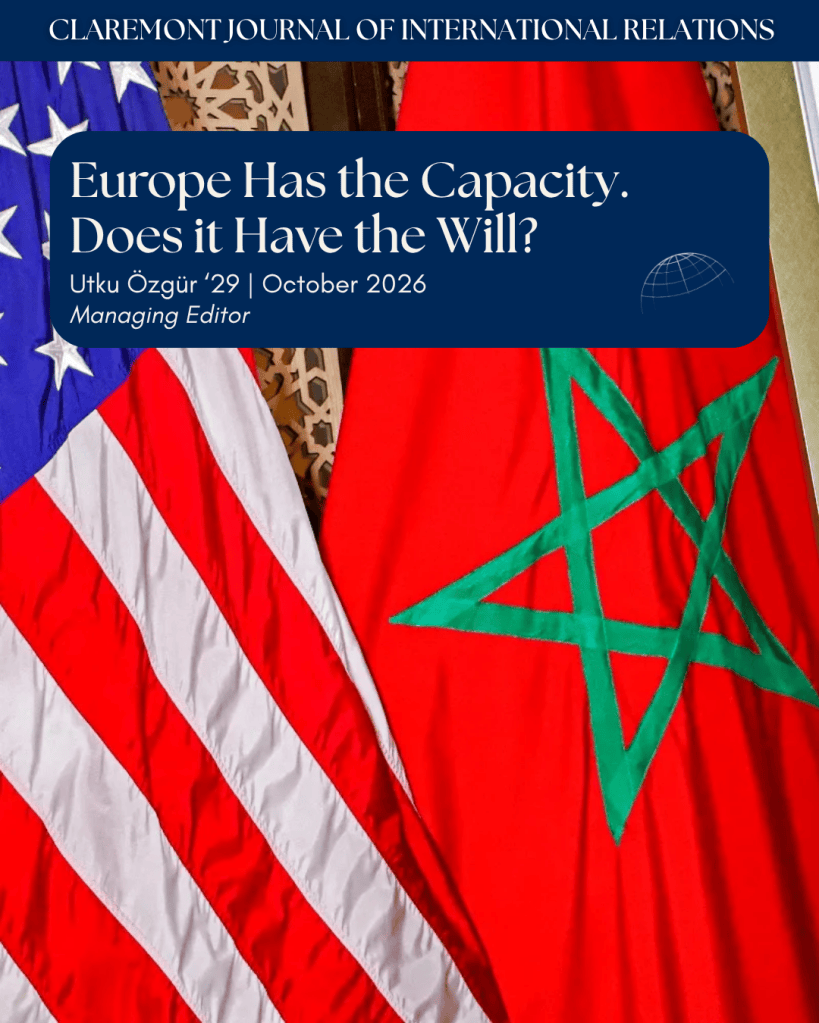
Europe Has the Capacity. Does It Have the Will?
My experiences in Belgium and Morocco made me much less confident that Europe’s potential will translate into a coherent defense of the liberal international order. The European Union has enormous economic resources, yet its decision-making remains fragmented and slow.
When the United States dismantled much of USAID, European governments had an opportunity to fill the gap and demonstrate that other liberal democracies could sustain international leadership independently of the United States. Many instead joined the retreat from international assistance. Europe continued to defend international cooperation rhetorically while reducing the resources needed to sustain it.
What I observed in Morocco made the same problem even clearer. Morocco has used migration diplomacy and its regional position to gain leverage over European governments. The EU needs Moroccan assistance in restricting migration, while Morocco expects financial support and diplomatic concessions in return.
Western Sahara has become central to this transactional exchange. The Trump administration recognized Moroccan sovereignty over the territory in 2020. Spain subsequently endorsed Morocco’s autonomy proposal, and French President Emmanuel Macron endorsed autonomy under Moroccan sovereignty in 2024. European powers moved toward the position established by President Trump, even as the EU’s highest court ruled against trade agreements covering Western Sahara without the consent of the Sahrawi people.
These choices reveal why Europe’s potential to replace American leadership cannot be inferred from its economic weight alone. Human rights and self-determination, some of the most important guiding principles of the liberal international order, become negotiable whenever they conflict with immediate political needs.
Europe has the resources to defend the liberal international order, but its policies show limited willingness to pay the price of doing so. A liberal international order requires governments to uphold its principles even when doing so carries real political costs. Their collective power may be sufficient. Their present commitment is not.
By Utku Özgür ’29, Managing Editor
Posted on October 9, 2026
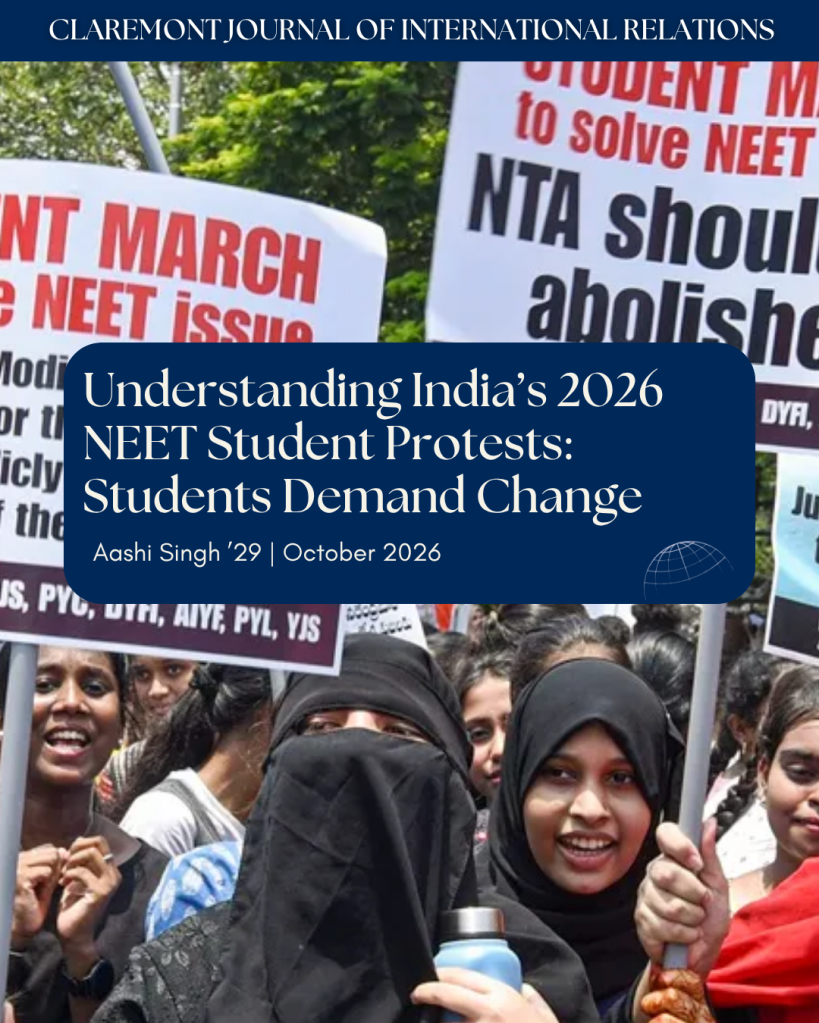
Understanding India’s 2026 NEET Student Protests: Students Demand Change
India’s student protests over the 2026 National Eligibility Entrance Test (NEET) became much more than a fight over an exam. What began with allegations of a leaked exam paper grew into a national movement questioning the fairness of India’s education system, the pressure placed on students and the government’s responsibility to protect their futures. NEET is one of India’s most competitive exams, with nearly two million students competing for fewer than 150,000 undergraduate medical seats. After allegations of a paper leak, the original exam, which previously was on May 3, was canceled and students were required to retest on June 21. For students who had spent months or years preparing, being forced to repeat the exam created enormous uncertainty and pressure.
The consequences of the exam’s mandated retest was devastating. Reports documented more than a dozen student suicides connected to the extreme pressure surrounding the retest. A 19 year old student, Sheikh Sana, died by suicide the day before the restest. These deaths show how dangerous an education system can become when a single exam carries such high stakes.
Education Minister Dharmendra Pradhan and their board did not hold any comment to the victims’ families. After outrage from students, India’s Chief Justice Surya Kant reportedly referred to the unemployed youth as “cockroaches”. A few students reclaimed the insult, and organized the public to form the youth movement coined the “Cockroach Janta Party”, demanding government accountability and educational reform. Demonstrations spread across India, and protesters called for the Education Minister to resign. On July 25, Pradhan did resign, while the government agreed to protestors’ demands to compensate families of students who had died.
20 year old student protester Romika, however, demands more reform from India’s government. For her, the movement represents more than NEET; she argues that the crisis has opened conversations about a damaged system.
“Either you change the system or we will change the system,” she said.
For many young women, the NEET exam is their only hope to have employment, financial independence, and control over their futures. This way, they aren’t vulnerable to common patriarchal expectations, like being limited to bearing children and forced into an arranged marriage or dowries. Romika argues that the board needs to be replaced with individuals who will make education accessible for female students, so that they aren’t pressured with “one chance” to get a fulfilling life.
“We don’t want an illiterate education system,” Romika said. “We want someone who knows the importance of education and can do much better for women.”
The NEET protests have shown that Indian students are no longer willing to remain silent when the system meant to create their future ends up failing them. This exam may have started a revolutionary shift for education in India, drawing attention to the state of equality, women’s rights, and the role of government responsibility in education.
By Aashi Singh ’29
Posted on October 9, 2026
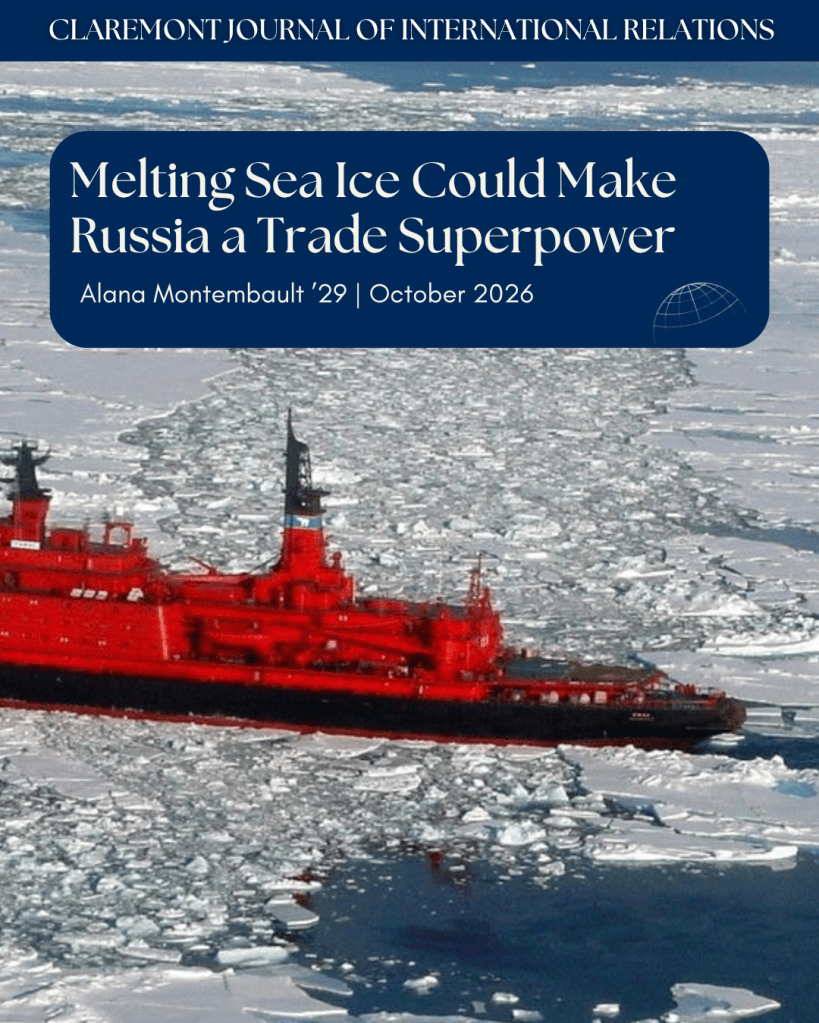
Melting Sea Ice Could Make Russia a Trade Superpower
In September 2026, a Chinese container ship reached England in just 25 days—not through the Suez Canal, but along Russia’s Arctic coast, on a route that reportedly cuts the trip nearly in half. As global warming melts summer sea ice, a company’s decision to save weeks at sea could also change which countries it depends on to deliver its goods.
The consequences of rerouting are especially visible in Egypt, where Suez Canal revenues fell 61% in 2024 as Red Sea tensions drove ships elsewhere. Although that decline was mostly due to conflict rather than Arctic competition, it shows how much a country can lose when trade finds another way around it.
Russia plans to take full advantage of the melting sea ice and increased Arctic trade, with Reuters reporting on September 24 that it plans to raise $2.35 billion from Russian exporters over the next ten years to build two icebreakers. Ships using this passage will need Russian permits and escorts, so expanding these services could give China a shorter way to Europe while making Russia the key gatekeeper to this important journey.
Although sea ice, high costs and limited infrastructure still restrict Arctic shipping from dominating, continued warming could keep northern waters navigable for longer over the next several decades, making Russia’s coastline an increasingly important connection between Asia and Europe.
For Russia, the longer-term possibilities are endless. A coast once nearly impossible to navigate will slowly become central to global trade. Russian permits and navigation requirements already shape access to the Northern Sea Route, and more international traffic will only give it more power beyond its borders. Global warming could therefore redistribute influence over trade without any country gaining territory, simply by changing where ships can sail. And as the ice keeps melting, drawing Asia and Europe closer by sea, it raises the question of how much of the world’s trade could slowly end up answering to Russia.
By Alana Montembault ’29
Posted on October 7, 2026
Spring Semester 2026
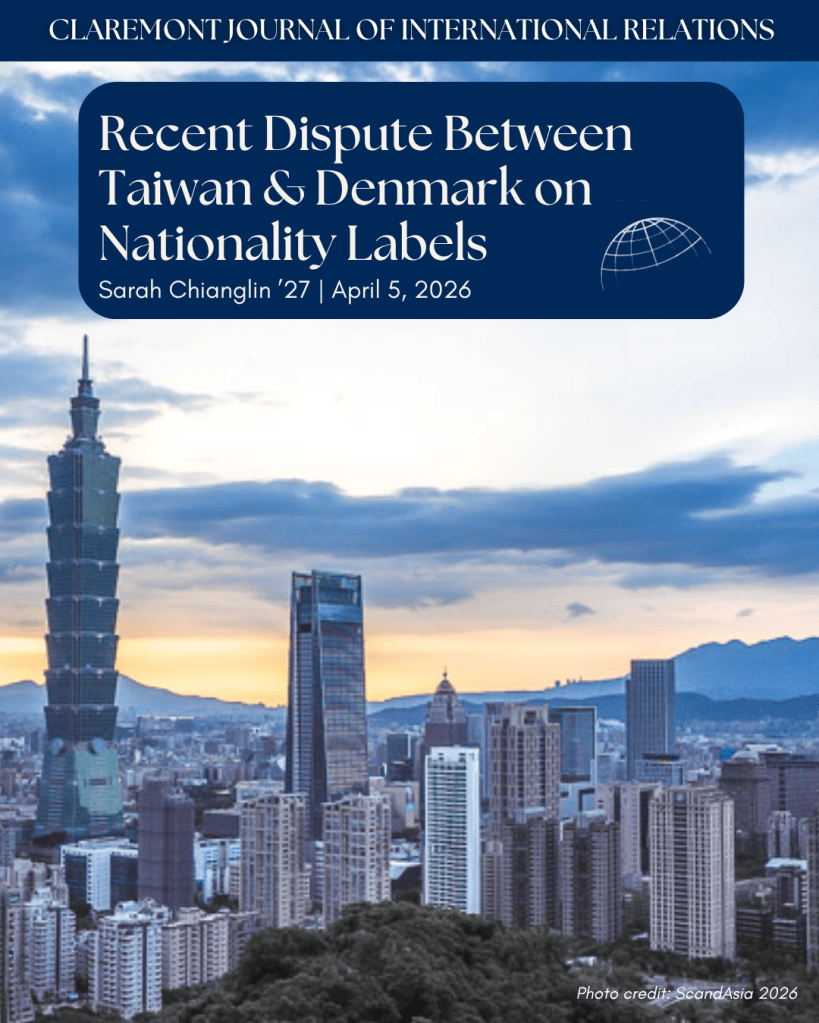
Recent Dispute Between Taiwan & Denmark on Nationality Labels
In 2024, Denmark changed its “Taiwanese” nationality label to “Chinese.” This label appears on official records and residence permits, completely removing “Taiwan” as a nationality option. Taiwan has responded by calling on Denmark to correct this designation or face possible retaliatory measures.
Denmark is the only EU country to list “Taiwan” as “China” on its residence permits. This is interesting because the EU and Taiwan share similar values regarding democracy, human rights, and the rule of law. According to the European Economic and Trade Office in Taiwan, the EU follows the “One China” policy, where countries acknowledge China’s claim over Taiwan but don’t fully endorse it. Following this policy means that countries can maintain unofficial relations with Taiwan while maintaining ties with Beijing.
The Danish Agency for International Recruitment and Integration stated that the nationality label change was “not an error but reflected Denmark’s policy of not recognizing Taiwan as an independent country.” Based on the nationality labels, Denmark does not consider Taiwan as an independent country. This view could be interpreted as a politically cautious approach to maintain relations with China. In response to Denmark’s actions, the Taiwan Foreign Ministry spokesman stated that Denmark must change the designation to “preserve the[ir] longstanding friendship.”Huang Yi-min, president of the Taiwanese Association Denmark, expressed her support for Taiwan to take “reciprocal measures.” Taiwan is demonstrating a more assertive stance on how it’s labeled internationally. Taiwan wants recognition as an entity separate from China. Additionally, by changing nationality labels to “Chinese”, Denmark supports the narrative that Taiwan is part of China. Denmark’s stance could also escalate cross-strait and diplomatic tensions.
Although this label can be viewed as just an administrative issue, it’s very symbolic & political, as many Taiwanese argue that the omission of “Taiwanese” misrepresents their unique cultural identity and sovereignty.
By Sarah Chianglin ‘27
Posted on April 5, 2026
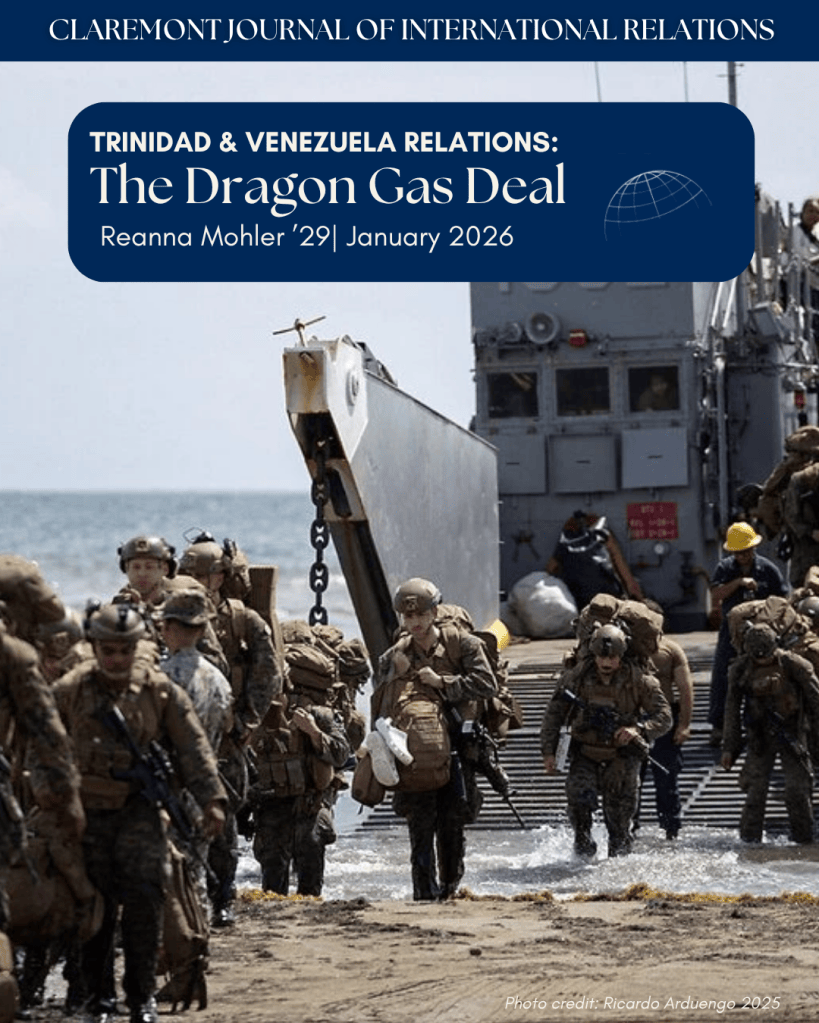
Trinidad & Venezuela Relations: The Dragon Gas Deal
The sudden halting of the Dragon Gas Deal is a significant setback to Trinidad and Tobago’s
energy future. The Deal’s suspension was caused by rising tensions surrounding the United States’ persistent military presence in Caribbean waters. The Dragon Field, a gas reserve near Trinidad, contains an estimated 4 trillion cubic feet of natural gas. This volume would increase Trinidad’s liquefied natural gas (LNG) exports and potentially counteract its declining domestic oil and gas extraction. However, the Deal, initially agreed upon in 2018, has been stalled several times due to political instability and U.S. sanctions on Venezuela.
For context, the U.S. maintains sanctions on Venezuela’s energy sector. In early 2025, the
U.S. had issued licenses to companies like Shell to operate in Venezuelan waters, exempting them from such sanctions. In April 2025, the U.S. revoked these licenses, removing the companies’ exemption from operating in Venezuelan waters. Following these revocations, Trinidad’s energy infrastructure took an immediate hit in the form of a $35.8 million after-tax loss.
Although Dragon gas talks reopened in October, diplomatic conflict between Trinidadian
leadership and Venezuelan President Nicholas Maduro led to Venezuela suspending energy agreements with the Port of Spain.This rupture places Trinidad’s energy security in jeopardy, given that the Deal was expected to offset its declining energy supply.
The Deal’s suspension, compounded by Venezuela’s reaction to the U.S. seizure of oil tankers,
raises questions regarding Trinidad’s energy future as well as concerns over future cross-border
cooperation. While Trinidad may pivot towards alternate sources of gas, investor confidence in
the region is already threatened by geopolitical insecurity. The Deal’s complications reveal the
fragility of Trinidad and Tobago’s current energy strategy, indicating that securing stable
offshore energy access should be a priority.
By: Reanna Mohler ‘29
Posted on January 30, 2026
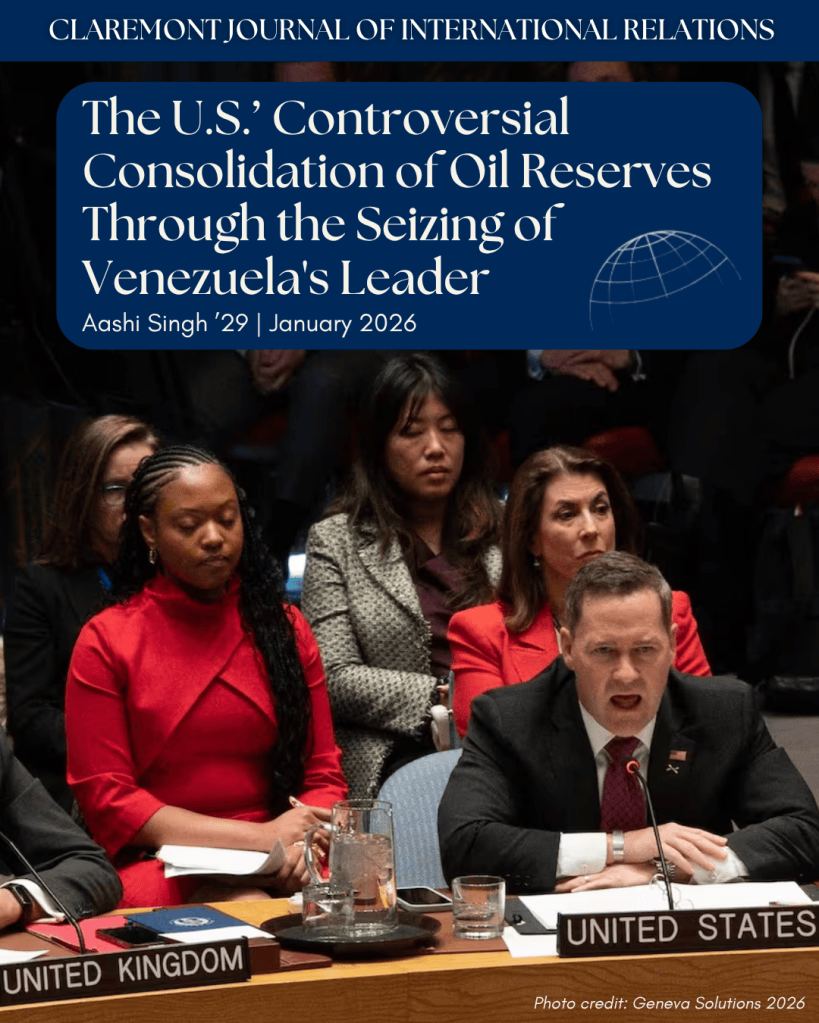
The U.S.’ Controversial Consolidation of Oil Reserves Through the Seizing of Venezuela’s Leader
Tensions between the United States and Venezuela—which had already risen over narco-terrorism operations like “Operation Southern Spear”—have entered a new phase after the US captured Venezuelan President Nicolás Maduro and his wife, Cilia Flores on January 3rd, 2026. After their capture, Maduro and Flores were flown to the US, bound to face charges such as drug trafficking and narco-terrorism, to which both have pleaded not guilty in court. The US’ shocking military action received criticism from the international community.
Shortly after Maduro’s capture, the UN Security Council held an emergency meeting with several US allies and enemies. During the meeting, Venezuelan Ambassador Samuel Moncada condemned the operation as an “illegitimate armed attack”. UN Secretary General António Duterres stated that the US violated the use of force against another state’s territory and political independence. Experts in judicial and international law have also argued that seizing a foreign head of state without consent is a violation of constitutional order. However, US Ambassador Mike Waltz defended the operation, justifying it as an enforcement of criminal charges.
Despite this initial framing, President Trump’s recent statements have contradicted the original narrative of law enforcement. The US’ framing of this conflict has shifted to focus on securing Venezuelan petroleum reserves for US interests.
Maduro’s successor, the former Vice President Delcy Rodríguez, has faced pressure from the US regarding Venezuela’s oil arrangement. Regarding the shift of assertion over Venezuelan petroleum, President Trump has announced that Venezuela would turn over a hefty amount of oil worth over $3-4 billion, which would be marketed to Americans and Venezuelans. On January 9, 2026, President Trump signed an executive order declaring a national emergency to oversee the revenue given, preventing any institutional order seizing funds.
The US’ unprecedented intervention in Venezuela has global implications, and has raised questions in the international community regarding sovereignty and legal precedent.
By: Aashi Singh ‘29
Posted on January 27, 2026
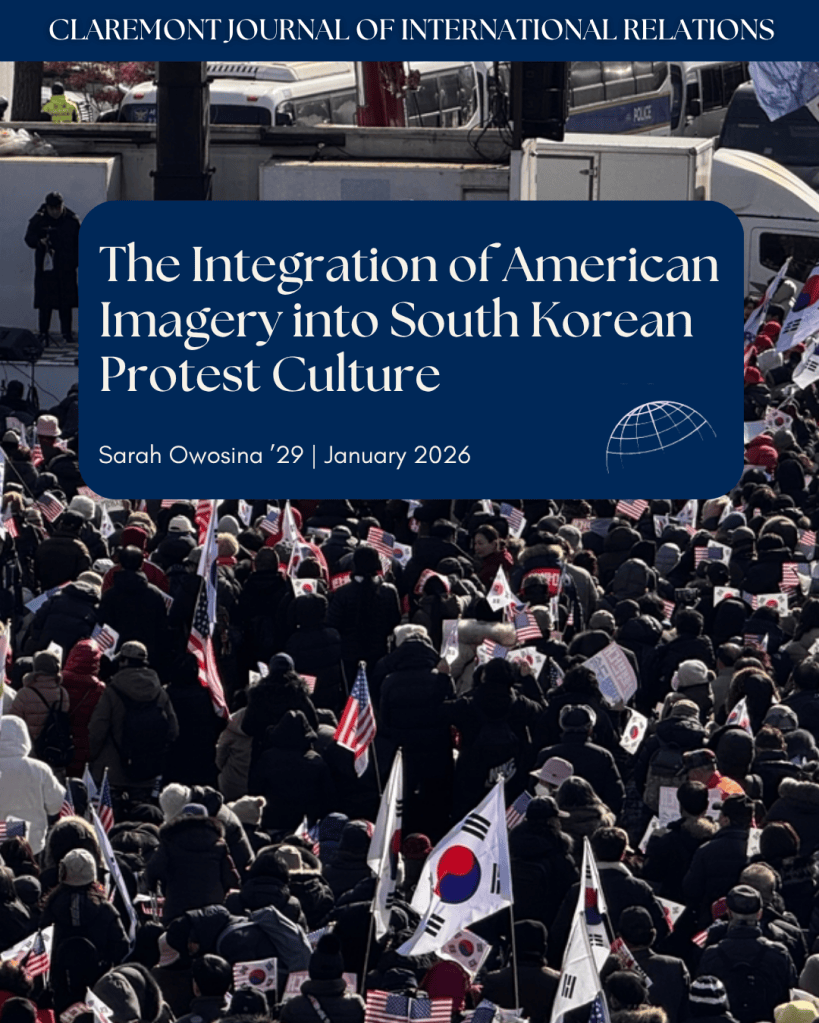
The Integration of American Imagery into South Korean Protest Culture
On September 26, 2025, protesters in South Korea took to the streets carrying signs stating: “We are Charlie Kirk”. While this use of American imagery abroad may surprise many, it reflects a broader invigoration of transnational political identities shaped by more than 70 years of history.
American influence in South Korean protest culture traces back to the Korean War (1950-1953). After the USSR-backed invasion of the South in June 1950, the U.S. intervened as part of the larger “War on Communism”. U.S. military aid and the 1953 armistice helped cement the U.S. flag as a symbol of democracy, the U.S.-South Korea alliance, and anti-communism.
Today, however, the meaning of the U.S. flag has become increasingly polarized. Following the impeachment of conservative president Park Geun-Hye in 2016, American flags began appearing alongside Korean flags in protests. After the impeachment of President Yoon Suk Yeol in 2024, a member of the Peoples Power Party (PPP), the use of American symbolism grew more prominent.
Presently, the flag is commonly associated with Korean conservatives and PPP supporters, who link it to ideals of national security, anti-communism, and economic liberalism. As sociopolitical tensions have intensified, American imagery has grown more visible. In early September 2025, American right-wing political influencer Charlie Kirk spoke at Build-Up Korea, where his messages on traditional family values and anti-communism resonated with right-wing Christian Korean groups. Kirk’s ideology aligned with their political beliefs and symbolized the strength of the U.S. alliance. After his death in late September, memorials honoring him emerged across South Korea, and “We Are Charlie Kirk” signs surfaced in pro-Yoon and anti-China demonstrations.
Yet,support for the U.S. is far from universal. Donald Trump’s visit to South Korea in 2025 sparked anti-Trump protests in central Seoul, with protestors citing economic concerns tied to his trade policies.
With President Yoon awaiting trial and social schisms growing, it’s speculated that references to American imagery—positive and negative—will continue within South Korean protest culture.
By Sarah Owosina ‘29
Posted on January 24, 2026
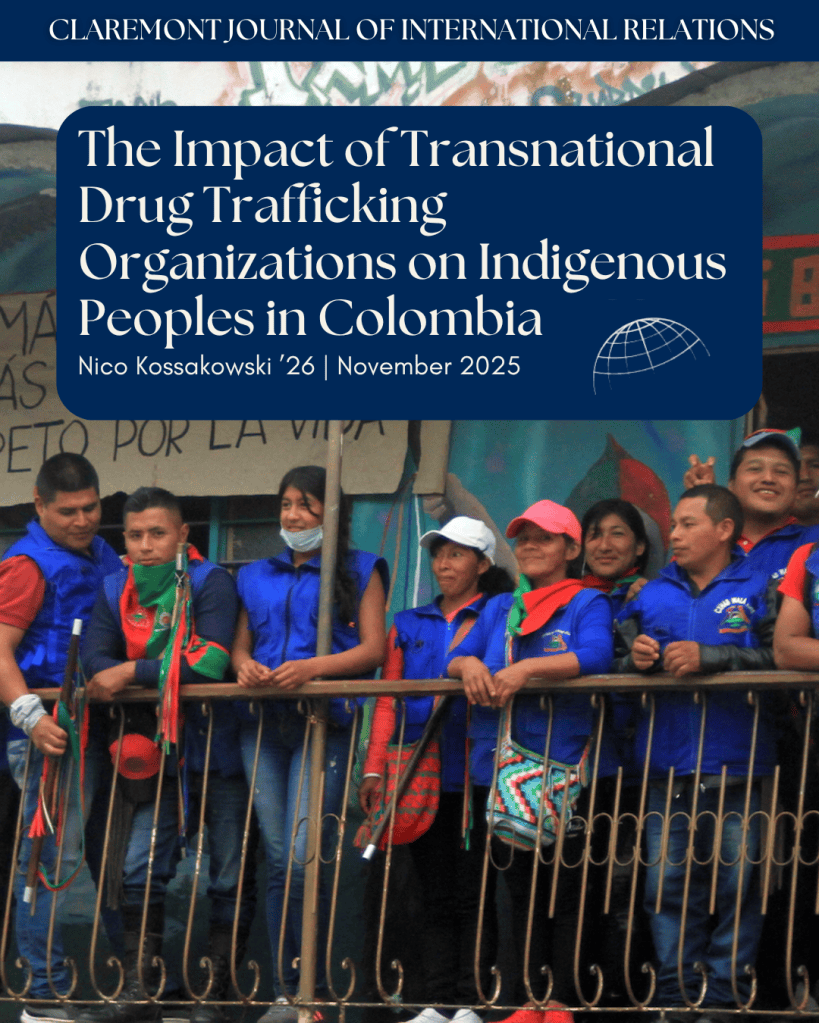
The Impact of Transnational Drug Trafficking Organizations on Indigenous Peoples in Colombia
Transnational drug trafficking organizations (TDTOs) have fueled violence in Colombia for decades, disproportionately impacting indigenous peoples. In regions like Cauca, indigenous guards known as the Kiwe Thegnas defend their territory from cartels and guerrillas that dominate illegal crop cultivation. Mass production of these crops has violently displaced rural and indigenous communities. The killing of Kiwe Thegna Cristina Bautista exemplifies the intimidation tactics cartels use to force indigenous peoples from their land.
Beyond violence, indigenous groups face economic entanglement with the drug trade. Global demand for narcotics has turned much of Colombia’s peasant population—many of them indigenous—into producers of raw materials, creating cycles of dependence. Historically, the state relied on crop eradication, often enforced by military and police. These campaigns failed to curb production and instead reinforced colonial and neoliberal structures, deepening marginalization. The persistence of eradication efforts underscores the reliance indigenous communities have on trafficking networks.
President Gustavo Petro’s ten-year plan introduces two pillars: oxygen and asphyxiation. The “oxygen” pillar invests in vulnerable communities, public health, and transitions to legal crops. The “asphyxiation” pillar targets organized crime to reduce violence. Yet crop substitution has limits: it negates the revenues indigenous farmers earn from the drug trade and disregards the coca plant’s cultural significance. For thousands of years, Colombia’s indigenous peoples have chewed coca, meaning eradication would mean losing an aspect of indigenous culture.
The relationship between TDTOs and indigenous groups has resulted in mass murder, displacement, and economic dependence. The impact of drug trafficking organizations on indigenous communities in Colombia is a complex nexus involving the indigenous communities, drug cartels, and the Colombian state. While there’s no simple solution, Petro’s new approach to the future appears optimistic.
By Nico Kossakowski ’26
Posted on November 8, 2025

